| Welcome, Guest |
You have to register before you can post on our site.
|
| Forum Statistics |
» Members: 235
» Latest member: Jimmytog
» Forum threads: 1,871
» Forum posts: 23,285
Full Statistics
|
| Online Users |
There are currently 97 online users.
» 0 Member(s) | 94 Guest(s)
Applebot, Bing, Google
|
| Latest Threads |
Finding my footing
Forum: University District
Last Post: Rachel Shale
07-31-2026, 06:33 PM
» Replies: 5
» Views: 355
|
Show off your BG3 Tavs
Forum: General Discussion
Last Post: Giovanni
07-26-2026, 03:13 PM
» Replies: 36
» Views: 22,582
|
Home Sweet Home
Forum: Central City Flats & Apartments
Last Post: Anna
07-19-2026, 09:12 PM
» Replies: 80
» Views: 21,605
|
Living where none should ...
Forum: Nightlife & Entertainment
Last Post: Marek
07-17-2026, 11:22 PM
» Replies: 0
» Views: 158
|
Monster Manual (CCDPD)
Forum: Government Facilities
Last Post: Ivan Sarkozy
07-16-2026, 10:05 PM
» Replies: 39
» Views: 9,851
|
Aine O'Carra
Forum: Biographies & Backstory
Last Post: Aine
07-05-2026, 11:22 PM
» Replies: 0
» Views: 191
|
A Snowed In Hunt
Forum: Underground city
Last Post: Enrique
07-01-2026, 01:59 PM
» Replies: 12
» Views: 2,524
|
Stone Cold
Forum: Central City Flats & Apartments
Last Post: Claude Saint-Clair
06-21-2026, 06:07 PM
» Replies: 37
» Views: 9,401
|
Forced Withdrawals [Nox's...
Forum: Red-light district
Last Post: Tatyana
06-14-2026, 01:19 AM
» Replies: 211
» Views: 51,481
|
Ghost of Time
Forum: Greater Moscow
Last Post: Nika Raskov
06-04-2026, 03:22 AM
» Replies: 22
» Views: 8,367
|
|
|
| Stone Cold |
|
Posted by: Ilesha - 02-04-2026, 06:41 PM - Forum: Central City Flats & Apartments
- Replies (37)
|
 |
The weather had been getting worse. She was grateful for the day off -- not that she had intended to be home, but having a stuffy nose and the cold ass weather didn't seem like a good mix so she had stayed home.
And as the snow fell Ilesha remembered the last blizard she'd been through with her parents, how the ground was white -- and the city was dead silent. Moscow had slowed to a crawl but it was still trying. It wasn't that dead yet -- yet being the keyword. It was only going to get worse.
Ilesha hunkered down in her own apartment but she had to check on the garage below first. Last thing she needed was for the doors to cave in because of the snow. Buring all the equipment inside would be bad. And cost too much money for both her semi-employeer and herself. She didn't want to have to replace things when she could make sure everything was shored up nice and tight -- a little magic here -- a little there and it would all be good.
She might have to undo some of it later -- like the tiny hinges might get sealed shut but that was the price you paid for strength -- the tiny little movments might be impared. That was the biggest problem she was finding in making her armor. That strength and movement seemed counter intuitive. She needed to find a better way.
But she was down stairs in the garage -- well outside it. Her hands on the walls filling the cracks with the power. She wasn't going to let her home fall because of the storm or poor maintenance.
|

|
|
| Psychotic Breaks or Parasitic Siege? Reports of "Ghost Possession" |
|
Posted by: Legione Sumus - 02-04-2026, 02:08 PM - Forum: The Scroll
- No Replies
|
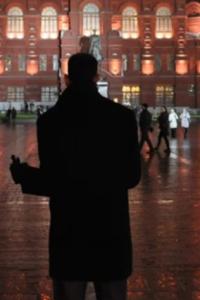 |
As the snow reaches the third-story windows of the Arbat District, a secondary crisis is emerging within the freezing, darkened apartment blocks. While the Ministry of Emergency Situations struggles with the structural collapse of older buildings under the 20-meter snowpack, a terrifying medical phenomenon is targeting Moscow’s female population—specifically those registered as "Sensitive" or "Channelers".
What was initially dismissed as "cabin fever" or hypothermia-induced delirium has taken a darker, more uniform turn. Witnesses trapped in the Presnensky District describe a "shifting mist" that appears to move against the wind, slipping through ventilation shafts and crushed window seals.
Whispers among the displaced suggest that a creature of myth and curse—is roaming the buried city.
"It wasn't a seizure," says Dmitri S., a survivor from a partially collapsed block on Tverskaya Street. "My sister was trying to use a small weave to keep the pipes from freezing. Suddenly, she went rigid. Her eyes rolled back, but she kept holding the Power. She started speaking in a voice that sounded like grinding ice—talking about 'Ages of Bronze' and 'Tablets of Stone.' She nearly burned the room down before she collapsed with a massive hemorrhage from her nose."
|
|
|
|
| Dominik Vas |
|
Posted by: Dominik Vas - 02-03-2026, 07:22 PM - Forum: Biographies & Backstory
- No Replies
|
 |
As the eldest Vas child, Dominik always carried responsibilities that extended far beyond the Carnival stage. Renáta watched him closely, teaching him not just illusion, but the burdens of command. She expected him to understand the balance of the carnival as a living entity: the schedules, the tensions, the rivalries, and the fragile loyalties that kept families together and the carnival moving.
His mother's lessons were subtle. She rarely issued direct orders; instead, she presented situations and let Dominik navigate them, correcting missteps later with quiet guidance or a pointed glance. Sometimes she tested him publicly, letting him mediate disputes in front of performers or visitors, watching how he handled tension without revealing frustration or indecision. Each success earned her a nod, each failure a silent weighing in her mind.
Dominik understood that being the eldest meant he would one day inherit more than an act — it was the future of the carnival itself. He learned to negotiate with suppliers, balance the needs of families, and anticipate logistical crises before they arose. Every mistake could ripple outward; every decision had consequence. In this way, Dominik became more than a performer. He became the anchor, the steadying hand behind the music, the illusions, and the spectacle.
Despite the weight, Dominik never resented Renáta. He respected her mind, admired her authority, and recognised the sacrifices she made to maintain the Vas legacy. But their relationship was a delicate dance. She could be exacting, critical, and unyielding, and he had to learn to take instruction without letting it harden him. The lessons of restraint, discipline, and foresight were intertwined with his deepest fears: that he could fail those who relied on him, that the wildness of his soul might one day overwhelm his careful balance — and cost others the safety he had promised them.
Renáta’s influence shaped both the man and the performer. Onstage, Dominik learned precision and control; offstage, he learned strategy, foresight, and patience. His natural charisma and quiet authority made others trust him instinctively, but the trust was earned through diligence, care, and adherence to responsibility. Even as he danced on the edge of latent power and untamed instinct, he understood that his life had always been larger than his desires.
Roza has always inspired him in ways he cannot name. Even as a child she was brilliance in motion, fearless and unrestrained where Dominik was cautious and precise. She spoke through music and movement, while he spoke through structure and intent. Together, they became the Vas act, Echoes of the Grove — not a performance of spectacle, but of presence.
Onstage, Roza led with her violin, her melodies pulling the audience’s attention where she willed it. Dominik stood beside her, the magician in plain sight, his hands steady and deliberate as he shaped the illusion itself. Objects vanished at his touch. Lights bent and lingered. Motion flowed where motion should not have been possible. Everything moved as though guided by an unseen rhythm, too fluid to be fake.
The act felt alive.
Dominik could feel it most sharply in those moments — the strange, electric sense of standing at the edge of something vast. Roza’s presence, the way her music flowed with instinct and emotion, unlocked a freedom he rarely allowed himself offstage. His movements loosened. His instincts sharpened. The careful discipline drilled into him since childhood did not disappear, but it became a frame rather than a cage. In her company, he could let just the tiniest spark of himself slip through, enhancing the act and giving it a vitality that captivated audiences. It was not recklessness; it was trust, choreography bound not only to precision but to intuition, emotion, and the unspoken dialogue between him and Roza.
Here, within the circle of the stage, the wildness was permitted.
The illusion was flawless because it felt true. Children watched him with unblinking focus. Adults left unsettled, unable to name why the tricks felt less like deception and more like revelation. Dominik noticed these things, filed them away, and told himself it was nothing more than talent honed to its peak.
They told themselves it was craft.
Privately Dominik told himself that whatever stirred beneath his skin — whatever made the act feel closer to ritual than performance, closer to invocation than illusion — could be controlled. That as long as it remained bound to choreography, timing, and Roza’s guiding music, it would never slip beyond his grasp.
The stage was sacred because it had boundaries. And Dominik had always believed that boundaries were enough.
Lalitha was the exception to his careful equilibrium. If she was firelight, Dominik was the stone ring around it.
Her music was wild, untrained, incandescent. She sang as though the world itself were listening, improvised as though rules were optional. Being near her made Dominik feel exposed, unmoored, aware of everything he kept carefully contained. She was chaos, brilliance, and hunger for life all at once — and he loved her for it. Their relationship unfolded slowly, cautiously, watched by everyone and sanctioned by no one. For Dominik, loving Lalitha felt like stepping into sunlight without armour.
With her, he could let the smallest hint of himself escape: a shared glance, a hand brushing hers, a quiet smile in the middle of the carnival’s noise.
Each fleeting moment felt like stealing sunlight.
Dominik’s love for her was patient but fervent. He admired her spontaneity, her unfiltered creativity, the way she could coax music from the simplest gestures or the dimmest instruments. She reminded him, in ways he could not articulate, that life could be more than discipline, control, and service. That joy could be unmeasured. That wildness was not inherently dangerous if approached carefully.
By the time he was twenty-two, he could no longer imagine a future that did not include her. He proposed quietly, sincerely, believing that love and loyalty would be enough.
Renáta did not hesitate. In front of the carnival, she performed a reading for the union, as she often did for matters of marriage and legacy. The cards and symbols she laid out were interpreted for all to see. Whispers spread immediately: the fortune suggested the marriage would be barren — not only in children but in spirit. The audience murmured, uncertain whether this was warning, ritual, or spectacle. Lalitha’s fiery gaze met Dominik’s, questioning, but he said nothing.
Later, when the crowd had dispersed, Renáta spoke to him privately. Her voice was measured, deliberate, carrying the weight of authority and truth.
“It is not that she cannot bear children,” she said, anticipating his unspoken objection. “That lie is convenient, yes—but you cannot argue it. The reading must stand publicly. What matters is that she is not suited to share your life as a wife or a mother. She burns too brightly, too unpredictably. You need someone who can carry the burdens alongside you, not become another one. You are the eldest Vas. Your life is not only yours.”
Dominik understood immediately why he could not argue.
To challenge her would fracture the fragile balance of the carnival, strain already-tense rivalries, and place Lalitha in the center of conflict she never asked for. He loved her too much to do that to her. And so he accepted the refusal, not because it was easy, but because it was right.
If he could not offer her a future without harm, it was kinder to stay away.
From that moment on, he kept his distance. He did not linger where she played music. He did not seek her out. He did not explain himself, because explanations would only reopen wounds. Loving her became something quiet and private, something carried rather than acted upon. It was the first great sacrifice of his life, and it shaped everything that followed.
They had reached Moscow when the act, once purely craft, began to shift. At first, it was subtle: a light lingering too long, a shadow moving unexpectedly, an object disappearing and reappearing with a grace that defied mechanics. During one performance, as Roza’s violin swelled, the world seemed to bend. Curtains lifted in a gust he had not summoned, shadows danced independently, and the air hummed with a vibration that made his chest ache. He did not know what channeling was. He only knew that something immense and dangerous answered him when he reached for control.
A week later, the price of reaching beyond craft became painfully clear. Dominik grew violently Sick. Fever burned through him, shaking his body, searing his mind. He dreamt of impossible lights, of space folding around him, of roaring forests and rushing rivers, of standing alone on a stage vast enough to swallow the world.
When he recovered, he emerged changed. The illness had been brutal, but it had also been a crucible.
The realisation terrified him.
Power, to Dominik, had never been something to enjoy. It was something to restrain. Something that could destroy if mishandled. Instinctively, he bound it to rules: to choreography, to gesture, and to Roza’s music. He allowed himself to touch it only within the rigid structure of performance, believing that if it lived only onstage, it could not consume him elsewhere. Echoes of the Grove transformed from performance into a controlled space where he could explore the power safely. Each illusion, each gesture, each movement became a binding, a ritualised channel for the wild energy that surged through him.
The power was intoxicating and horrifying in equal measure. He feared losing control — not for himself, but for those around him. For Roza. For Lalitha. For the family and carnival that relied on his steadiness. Every use of his power felt like walking the edge of a blade. For Dominik the first lesson of power, desire, and duty was that the most dangerous magic was not the one he wielded — it was the part of himself that wanted to let it go.
When the Vas Carnival finally anchored itself in Moscow, Dominik withdrew further into responsibility. The wandering life of tents and open roads was over; now the family had a permanent home, and with it, a new weight of expectations. He oversaw the logistics of daily operations, negotiated permits with wary city officials, and acted as Renáta’s emissary to the outside world. His words, measured and deliberate, carried authority, and his presence alone often quelled disputes before they could escalate.
He still performed with Roza, but only when necessary — and always with caution. Every movement, every gesture, every note of her violin became a framework to contain what he had glimpsed in the power. The act retained its magic, its pulse of wildness, but Dominik’s role had shifted. Echoes of the Grove was no longer just a performance; it was a rehearsal for self-control, a stage on which he could practice mastery over a power that terrified him. Vigilance had become second nature.
He avoided Lalitha still.
Not because his love had faded but because love, for Dominik, had become something demanding vigilance and restraint. To be near her was to risk wanting what he could not allow himself to take: freedom, joy, a life unbound by caution. To love her openly would have been a betrayal, not of her, but of everything he had sworn to protect — the family, the carnival, and the fragile balance of control he clung to.
Even as he watched her from a distance, he carried the ache of absence quietly, tucked beneath the careful composure that defined him. He allowed himself fleeting glimpses of what might have been in private, in the briefest sparks of memory or music, but he never reached for them. To do so would be to invite chaos into a world he had spent a lifetime learning to manage.
The final unravelling did not come from Dominik.
It came from Roza.
When Renáta discovered her with Esper, the confrontation ignited immediately — voices raised, fury echoing through the house, the thin walls between family and spectacle collapsing all at once. Roza, defiant and incandescent, raised a barrier between herself and her mother, not in fear but in declaration. The magic held firm as Renáta shouted her name in Hungarian, pounding against an invisible wall she could not pass.
The entire household woke to it. Then the carnival.
There was no quiet resolution, no private reckoning. Roza announced her decision plainly, without apology: she and Esper were leaving together. That the caravan was not the life she chose. That love, once named, could not be folded back into obedience.
Renáta raged, but even in her fury, there was a performative edge to it. The spectacle was deliberate. Authority had to be seen defending itself. Pride and punishment tangled in her voice as she condemned the choice publicly, even as some deeper, complicated part of her understood it. Children, after all, were meant to find their own paths — even when those paths cut away from the family.
Their departure was immediate and irrevocable. No farewell performance. No explanations offered to the wider carnival. By morning, their rooms were empty, their instruments gone, their absence echoing louder than any argument could have.
For Dominik, it felt like losing the ground beneath his feet.
Echoes of the Grove ended not with a final bow, but with silence. Without Roza, there was no act — no music to guide the illusion, no shared rhythm to anchor him. He did not attempt to perform alone. The act had never been about spectacle; it had been about balance. Without her, there was nothing to hold the wildness safely in place.
And so he stopped.
The stage, once sacred, became forbidden.
Dominik bore the aftermath without protest. He mediated arguments, absorbed blame, and redirected fury away from Roza and Esper as much as he could without openly defying Renáta. He became the quiet wall between his mother’s authority and the carnival’s fracture, working tirelessly to prevent the rift from splintering the community beyond repair.
He became quieter after that. More contained. The warmth remained — people still trusted him, still sought him out — but the part of him that had once felt alive onstage went dormant. The wildness did not disappear; it simply went underground, coiled tight and waiting.
Dominik Vas did not break.
But something within him closed.
Personality: Dominik Vas is, at first glance, calm, deliberate, and dependable – the embodiment of steadiness in a world built on spectacle and chaos. As the eldest child of the Vas family, he carries responsibilities beyond his years, understanding intuitively that his choices ripple through the lives of others.
Dominik is fiercely loyal. He keeps his word, protects those he loves, and will sacrifice his own desires for the safety or happiness of others. He is a protector, a guide, and often the silent force behind the scenes, ensuring that the carnival functions flawlessly even when his contributions go unnoticed.
Fear is a constant companion. He knows the danger inherent in the power that has awakened within him. He understands that without careful control, the same power that enchants could also destroy. This fear sharpens him, teaching vigilance, patience, and precision. It makes him cautious in love, in magic, and in life itself, and it fuels his drive to master his abilities rather than be mastered by them.
Despite this, Dominik is not without passion. He feels deeply, loves fiercely, and is drawn to brilliance and beauty wherever he finds it. Music, performance, and artistry stir something primal in him — the part of his soul that has lived through wild gods and restless knights. Yet he tempers these impulses with discipline, aware that the line between inspiration and catastrophe is thinner than most can imagine.
|
|
|
|
| CCD/USA border closure |
|
Posted by: Ascendancy - 02-02-2026, 05:43 PM - Forum: Current Events
- No Replies
|
 |
Entrance into the CCD has been functionally restricted for anyone trying to enter from the USA.
This is in effort to protect CCD border from potential threats. Access through other regions (e.g. Africa, China) is unaffected. Anyone who is a CCD citizen who attempts to enter into the CCD from the USA will be given additional review, but there will be significant delay. Therefore, any CCD citizen who wants to return home before the functional closure should make haste.
This restriction is enacted at 6 am EST / 11 am UTC on January 1, 2047. It is unknown how long this restriction will last.
Notes for players: there are likely ways to get around these issues for someone with connections, but for the general person, this will be a problem.
|
|
|
|
| Ethically Sourced |
|
Posted by: Jia Xin Kao - 02-02-2026, 05:19 PM - Forum: Industrial Districts
- Replies (1)
|
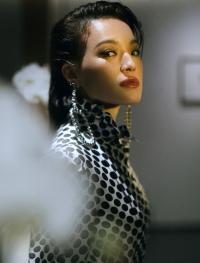 |
Zizi’s little gathering didn’t turn out to be terrible, though it had been filled mostly with old men. But much like her brother, Jia Xin was effortlessly adaptable, and whatever she might have truly thought of the company she was all grace and laughter for the duration. The Covenant and its clubs did not immediately interest her – the Kaos already ran numerous entertainment venues across East Asia, and Moscow was a cold and grim city. Aside from the business she was decidedly coy about, she had little intention of staying longer than necessary. At least until Zixin let slip a particular name, and Jia Xin’s brow arched coolly. A look between siblings if ever there was one. Her opinion changed after that, and she made her intention clear to him immediately. If Ozy was involved, Jia Xin wanted one of the clubs for her own. Zixin rarely denied her anything; he never had. The moment his amusement at her demands was both magnanimous and indulgent, her tact changed to suit. She was a sly creature, and she realised immediately that it was not him she must convince, but this Covenant itself.
It wasn’t hard, of course. A little healthy wagering and boasting: that a club under the Kao’s design and purview would be the most successful of the lot. Not that Jia Xin actually intended to do anything so base as run it herself. Before the conversation had even gotten cold her diamond tipped nails had tapped a message to Connie on her wallet. He’d not refuse. And by the time she called him directly, in the early hours after the party had finally wound down, she knew he’d be on the first flight to Moscow. Jia Xin’s own plans adjusted seamlessly. Perhaps the city would be more tolerable with Constantine’s company.
The next day she met the security arranged through Pervaya Liniya: a bespectacled British man Jia Xin did little more than glance at for now. He was formal, polite, and he fit into her schedule without fuss. She was not interested in making conversation.
After some quick deliberation over a lavish breakfast in her suite, she called home and asked Liyana to arrange a realtor to shortlist suitable properties. Her cousin exclaimed aghast down the phone, but Jia Xin only laughed and told her Moscow was not so bad as all that. Zixin might be content to slum it in a hotel, but Jia Xin was not so easily satisfied. Not that it wasn’t as beautiful as the man who owned it, but Zizi ought to be sending the message that he intended to stay – and that included a suitably impressive home for a Kao. Fortunately he had a dutiful sister to take care of such things. Afterwards she called her Yeye to ask his forgiveness – always an easier conversation than begging for permission. By the time Connie arrived, Jia Xin’s visit here would no longer be secret: the socials would be abuzz with rumour and speculation once they were within one another’s orbit. Better to tell her grandfather now that she intended to stay.
To fill her time she explored the city a little that day, and found the experience entirely novel. No one recognised her, which was in equal measures refreshing and disconcerting. Though she had to share the space with other tourists, something she decided she was less enamoured of. Navigating transport was unfamiliar too, but she found a use for Edwin Dean then, and to his credit he did not complain. Later, after a dinner dined alone in Radiance’s exquisite restaurant, Jia Xin dressed and readied herself for the business which had brought her to Moscow in the first place. A quiet thrill hummed in her stomach, a smile on the edge of her lips.
The sun set early this time of year, and the industrial district was not busy – or the part she had the car directed to, anyway. Jia Xin’s clothes were dark and serviceable, and she wore no jewellery or adornment, but somehow she still looked rich. She let Edwin open the car door, but did not pause to wait for him when she stepped out into the cold. A man stood by a warehouse door, tall, long hair smoothed back from his temples. He was not watching for her arrival; rather, he seemed to be thinking quietly, and yet his eyes found her anyway, swiped quickly to Edwin Dean, and then returned to her.
“Ms Kao?” he said. His voice was smooth, accented.
|
|
|
|
| A job [Paragon Group] |
|
Posted by: Sage - 02-01-2026, 02:11 PM - Forum: Business District
- Replies (2)
|
 |
It has been months since he'd stumbled upon the doors of Paragon. Since he tried to find information on Raffe inside the walls. He'd met their primary IT security both in person and in the super information highways. The kid was good, if a little slow and highly distracted. It didn't take much to push him somewhere and keep him busy while he did other things.
But now he was here, sitting in a room waiting for his first day. The snow was coming down, but he'd made it into the glass building. Aiden had asked him why? and Sage just shrugged. "I can't live off your good graces for all eternity." Which he wasn't but Aiden didn't need to know all his little secrets. Though he kept nothing from the man he loved -- he just didn't share all the details.
|
|
|
|
| The Will To Live (Sanctuary) |
|
Posted by: Penny - 01-31-2026, 12:50 PM - Forum: Greater Moscow
- Replies (22)
|
 |
((Continued from here))
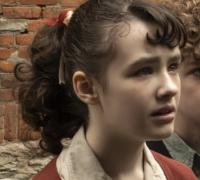
The truck was warm, but still Penny shivered. The paramedics had some extra clothes in the truck that were warmer than what she had on. The boys went up front and Anita helped her get changed. Penny had tried on her own, but with her shivering she had struggled. She asked Anita for help. She still wore Anita's paramedic coat. Both the clothes and coat were too big for her. She wanted Anita to at least take her coat back, but there was a firefighter coat in the ambulance that she put on. It was too big for Anita too, and that made Penny laugh a little bit. They both probably looked ridiculous.
After that they laid her down on a gurney and covered her with blankets. The truck began to move, and even though Penny couldn't see, she knew it was slow. Getting out of the house had shown her how much snow had fallen. It was more than she had ever seen before. She had also seen her reading tree. It had snapped and landed on the house. That had hurt to see.
Penny was still shivering. She asked Anita why and to her surprise, Anita answered. Penny had hypothermia and that meant her body was loosing heat faster than it could produce it. That sounded scary, but Anita was calm and that helped Penny to remain the same. Their speed picked up and she heard one of the men up front say they had gotten behind a snow plow. Hope seemed to blossom in every one after that. It all ended when they suddenly stopped.
"What is it?" Anita asked the driver.
"Plow stopped," the response came back. "Driver heading this way."
The front doors opened and the men exited, but they opened the back door and came in, accompanied by another man. The plow driver Penny assumed. He informed them that the snow was too high even for his plow. It was stuck. The men seemed dejected, but Anita remained calm. Penny didn't know how. She was feeling scared.
"Where are we?" she finally asked, looking outside.
"The Sanctuary of Ascendant Flame is the closest building, but we have to hike to get there. Should we just stay here?" he answered.
That seemed the best plan to Penny, but Anita shook her head. "This isn't stopping anytime soon. We have either until we run out of fuel or until we're buried and start breathing in exhaust fumes. Pack up the water bottles, rehab snacks, and medical supplies. Tether them to a back board. I'll wrap up Penny. We can make a makeshift harness to help me carry her. This coat is big enough I should be able to keep her underneath to keep her warm."
They all went to work, including the plow driver. Anita began to wrap Penny in blankets. "I'm scared." Penny finally said.
Anita looked at her, compassion in her face. "I know, honey," she said. "We're close to safety. It will be nice and warm there and we'll get you all taken care of." Anita put a hand on her cheek. It was warm. "You're going to be okay. I promise."
The work done, they began to use straps to attach Penny to Anita. They then covered Anita with the coat and buttoned it up. It wasn't very comfortable, but Penny understood why this was best. She didn't complain. They then began their trek towards the building. One of the medics and the plow driver was in front of them with shovels trying to clear some of the snow to make the going easier. It was hard for them to keep up with how much snow was falling. The other medic was behind them pulling the the back board with supplies like a husky carrying a sled.
It wasn't easy going. Penny was still shivering. She didn't speak much, but Anita kept saying comforting words. Penny felt guilty. If they hadn't stopped for her, the medics might have made it to safety. She didn't say it, but she felt it. The cold out here was worse. Even with the blankets, coat, and Anita's warmth. Penny turned her head the best she could to get a look. She could see the building. It was so close, but so far away at the same time.
"We just need to get there?" she asked Anita. "They we're safe." Anita confirmed it and even with her calming presence, Penny was losing hope. She was scared she was going to die out here and bring these nice people with her.
I want us to live and all we have to do is make it there for that to happen. the thought kept repeating itself in her head over and over again. I want us to live and all we have to do is make it there for that to happen.
Penny reached her hand out towards the building the best she could while tethered to the woman carrying her - a desperate reach for the safety near them. As she did, a warm light spread through her abdomen. Its contrast to the cold around her made it almost painful. She gasped and then saw threads of fire and air go in front of them. When they were gone, there was a melted path through the snow. The warm light was gone, replaced only with the cold.
Penny felt incredibly tired then. She had trouble remembering what was going on. She felt so confused and so cold. "Warm light is gone. Cold...so cold... her voice was quiet as Anita began to run.
|
|
|
|
| Penelope Zemlov |
|
Posted by: Penny - 01-31-2026, 12:40 AM - Forum: Biographies & Backstory
- No Replies
|
|
Character Name: Penelope “Penny” Zemlov
Character’s Age: 14
Character's Origin: Moscow
Character’s Occupation: Student
Psychological Description of Character: Normally, Penny is happy and curious of the world around her as well as persistent when trying to achieve her goals. Currently she is mourning the loss of her mother and is depressed and scared.
Physical Description of Character: 4’8” with dark hair and green eyes.
Supernatural Powers:
Singer
Channeler
Current Strength: 0 (has not sparked)
Potential Strength: 29
Unlike most females, she has an affinity for earth and fire
Experience Level: New
Reborn God: Gaia/Terra
A Deal
It was in July of 2031 that Anastasia Zemlov first came into contact and caught the eye of Nikolai Brandon. A secretary in the Kremlin, she had been asked to bring him some documents to sign. After a night of passion, a child was conceived.
Unsure of how Nikolai would react to the news that he was to be a father, Anastasia tried to work up the courage to tell him. Before she could, however, she was approached by two men who offered her a way to make sure her child was always cared for. She would be given a house, a job in the private sector, and a bank account in which her child’s university education would be provided. In return, Anastasia had to do one thing: never reveal to anyone (especially Nikolai Brandon) of her child’s paternity. It was a sure thing. Anastasia took the deal and paperwork was signed. Unknown to her was the men were members of a secret organization called the Di Infieri - who were secretly keeping track of all of Nikolai Brandon’s children.
On April 22nd, 2032, Anastasia gave both to a baby girl that she named Penelope. As per her agreement, the father section of her birth certificate remained blank.
A Green Thumb
Penelope, who would go by Penny, was an intelligent child, and curious about the world around her. It was clear from an early age that she liked being outside in nature. She would often spend time sitting underneath the birch tree in their backyard reading. She loved plants of all kinds and always loved to go to gardens and gardening stores.
Penny and her mother built a garden in their backyard where they grew fresh vegetables and flowers. A bench was put there so Penny could sit and look at the flowers. On nice summer days, she would often be found simply sitting on the bench, humming a tune. Penny would notice then that the plants seemed to reach towards her when she did this. It always made her smile and she felt as if the plants liked her as much as she liked them.
An Academic
Penny loves to learn. She enjoys reading and can often be found with her nose in a book. Even though she gets good grades in all her classes, science is her favorite subject. She is involved in music as well, singing in the choir and playing flute in the orchestra. Her teachers comment mostly on her curiosity, saying jokingly that her favorite question is “why?” Penny wants to understand how the world around her works, and it is what makes her an exemplary student.
Questions About Her Father
For most of her childhood, Penny never really asked about her father. She was content with her mother and it wasn’t on her mind. But as she got older, friends, classmates, and teachers would ask about him. The question of who her father was began to dig into her head.
Penny didn’t want to make her mother feel like she was inadequate. Penny loved her mother with all her heart, so she kept her questions to herself for years. It was after she turned 14 that she began to ask. Anastasia initially brushed off the questions, but Penny’s curiosity wouldn’t let it go. She began to ask things like “What is his name?” “Is he nice?” and “Can I meet him sometime?” Anastasia began to feel guilty for her role in hiding Penny’s father’s identity from her. In time, she said she would agree to tell Penny of her father, but first, she had to talk to him. Penny wasn’t sure she understood why, but was glad that her mother had eventually caved in.
A Broken Contract & The Snow Cataclysm
Anastasia went to work the next day. She had been there for thirteen years and was unaware that the business she worked for was owned by the secret Di Infieri. Anastasia drafted a letter to the Ascendancy to inform him of his daughter Penelope. The draft was found and reported.
Later, one of the men who had offered her the deal appeared, draft of letter in hand. He reminded her of her binding agreement. Frightened, Anastasia told him that Penny was asking questions. It was a moment of weakness and she wasn’t going to send it. She would abide by the agreement. She tried to make it convincing even if it was a lie.
He told her to deal with the situation. Lie to Penny. Tell her that her father wants nothing to do with her, or better yet, come up with one and tell her he’s dead. End the questions. Anastasia told him she would, knowing she wouldn’t be able to bring herself to do it.
The Di Infieri’s trust in Anastasia had been shaken, however. It didn’t matter if they believed her or not. She was a liability. She had to go. When both mother and daughter were away from the house, their roof as well as the birch in their back yard was sabotaged. There was a winter storm coming. They made sure house wouldn’t make it.
In early 2047, a massive snowstorm hit Moscow. The sabotaged roof and tree were unable to hold the weight of the snow and ice. The tree fell and the roof of their house caved in. Anastasia was buried. Penny was stuck in a corner, able to see her mother was no longer moving. She was filled with fear. She knew her mother was dead, and it was beginning to get cold.
|
|
|
|
| Repeat to remain [The Garden] |
|
Posted by: Raffe - 01-29-2026, 01:37 PM - Forum: Military District
- No Replies
|
 |
Raffe fell into a routine based purely on survival. Months had passed; he knew by now he was kept in a government facility, no longer monitored by Paragon but something more deeply classified. The details were incidental things he had no opinion on. The power he’d never wanted was gone – that should have been a revelation, but it only made sense in a way Raffe acknowledged and then set aside as irrelevant. Bastian knew. The Commander. Presumably the Ascendancy, though Raffe never met him. The private experiments to explain his condition continued behind closed doors – not to cure it, but to understand it. Raffe didn’t ask questions, he only consented. Nor did he ask what was gleaned.
They’d kept a box of his things, retrieved from Kallisti after he’d left. His whole life’s worth, including his wallet, Nox’s ring, and an unopened Christmas present; but he never went through any of it. The man he was now had no levity left to him, no joy, and no right to darken his old life. Memories of the masquerade – of Noemi’s soft concern, and Kristian’s description of the yawning abyss he saw inside – lurked in his mind sometimes. But it was the discomfort of trying to pretend he was still the same person inside, not the horror of what he might be now. So he rarely looked back.
The night at the carnival was little beyond a blur, and the weeks after that nothing but haze. The trackmarks on his arms were healed, the withdrawal long past. Sobriety had been cold. But Bastian enforced self-discipline with the tenacity of a man who wielded the same weapon inwards, and exacted the same standards in others. He wasn’t kind, but he was thorough. Every moment was accounted for and put to purpose. Exercise. Meditation. Raffe had never picked up a weapon in his life, let alone something so archaic as a sword, but he did as he was instructed and learned that too. It was easier not to question, to live inside a body that worked like a machine. He ate when he was told to, and what he was told to. His body grew lean and strong. When he caught himself in the mirror, which he rarely did, his face was drawn and angular. White ghosted his temples, stark against the burnished curls.
He didn’t seek company. There were other Dominions, but he barely saw them. The Garden housed other men learning how to wield the power too, but he avoided them, and Bastian’s stern eye encouraged a distance. Only Morven crossed it on occasion, not because he was special, but because she did not ever seem to account herself as beholden to the hierarchy and rules. She offered Healing more than once, eyes narrowed like she sensed something broken beneath the surface. But he only declined and moved away.
|
|
|
|
| Shinshin [Hikari] |
|
Posted by: Eidolon - 01-29-2026, 01:24 PM - Forum: Nightlife & Entertainment
- Replies (4)
|
 |
Whatever instinct had blocked her from the ability, the confrontation in the tunnels had snapped it free. She felt it now, a pulse of warmth and light just beyond her ordinary senses. The shame of the temptation to embrace it warred with her resolute acceptance that this was what she was. The compromise she had no choice but to be. Just because something felt right did not mean it was right.
Dusk was settling on the streets. Snow drifted thick and silent; not dangerous yet, but it was settling hard. She walked alone.
Long months of devoted practice had tightened the muscles and reflexes the past years had let soften. Eido moved with an understated, agile grace, head tucked against the weather, eyes softly observant. She wasn’t hunting, or not that kind; she was looking for her brother, and walking because it was better than stillness. Kōta hadn’t answered his wallet, and she was checking his most usual haunts – those she knew of, at least. Kōta maintained his connections with the underworld in Moscow; talked just enough of Yazuka influence, new clubs, and new clients, for her to understand the circles he called home. He had mentioned Haruto's name in passing once, just pointed enough that she caught the meaning, though she'd only inclined her head and never asked more about it. Since Zephyr had erased their names from the Atharim lists, he had delved back deeply into the world once denied him, and Eido had reluctantly let him go. The admonishment of him seeking a real life was often on the tip of her tongue, but he only ever raised an amused brow and ushered her to a mirror. He wasn’t wrong. And she could never meet her own eye in that reflection.
|
|
|
|
|