| Welcome, Guest |
You have to register before you can post on our site.
|
| Forum Statistics |
» Members: 235
» Latest member: Jimmytog
» Forum threads: 1,871
» Forum posts: 23,285
Full Statistics
|
| Online Users |
There are currently 97 online users.
» 0 Member(s) | 94 Guest(s)
Bing, Google, Applebot
|
| Latest Threads |
Finding my footing
Forum: University District
Last Post: Rachel Shale
07-31-2026, 06:33 PM
» Replies: 5
» Views: 355
|
Show off your BG3 Tavs
Forum: General Discussion
Last Post: Giovanni
07-26-2026, 03:13 PM
» Replies: 36
» Views: 22,582
|
Home Sweet Home
Forum: Central City Flats & Apartments
Last Post: Anna
07-19-2026, 09:12 PM
» Replies: 80
» Views: 21,605
|
Living where none should ...
Forum: Nightlife & Entertainment
Last Post: Marek
07-17-2026, 11:22 PM
» Replies: 0
» Views: 158
|
Monster Manual (CCDPD)
Forum: Government Facilities
Last Post: Ivan Sarkozy
07-16-2026, 10:05 PM
» Replies: 39
» Views: 9,851
|
Aine O'Carra
Forum: Biographies & Backstory
Last Post: Aine
07-05-2026, 11:22 PM
» Replies: 0
» Views: 191
|
A Snowed In Hunt
Forum: Underground city
Last Post: Enrique
07-01-2026, 01:59 PM
» Replies: 12
» Views: 2,524
|
Stone Cold
Forum: Central City Flats & Apartments
Last Post: Claude Saint-Clair
06-21-2026, 06:07 PM
» Replies: 37
» Views: 9,401
|
Forced Withdrawals [Nox's...
Forum: Red-light district
Last Post: Tatyana
06-14-2026, 01:19 AM
» Replies: 211
» Views: 51,481
|
Ghost of Time
Forum: Greater Moscow
Last Post: Nika Raskov
06-04-2026, 03:22 AM
» Replies: 22
» Views: 8,367
|
|
|
| Please Help Me Find My Dad |
|
Posted by: Penny - 02-26-2026, 01:37 AM - Forum: The Scroll
- No Replies
|
 |
PetuniaBlossoms76:
I lost my mom in the storm. She told me about my dad and was setting a meeting with him soon, but didn’t make it in time. I don’t know his name or anything about him. He might be my only family. I don’t know where to look at all. How do I find him?
|

|
|
| Down in the Basement (Paragon) |
|
Posted by: Ghost - 02-22-2026, 12:41 PM - Forum: Business District
- No Replies
|
 |
If what Adam heard was true, for once he was glad to be stuck in Paragon's basement. The weather was apparently quite bad. Adam was used to being down here alone, and mostly that sucked. Despite his disfigurement, he was missing social interaction. He was terrified of it at the same time. It was a strange dichotomy.
Right now, the room was quiet. Adam didn't want to listen to anything as he field stripped his pistol. He had no ammunition and it hadn't been fired, so everything should be fine, but the process filled the time. He had asked Victor to make sure. Besides the sensors in the grip and sights, it was mostly the same as a normal one - at least in the sense that he could disassemble it as any other firearm. The process wasn't necessary today. The gun was immaculate, but it was a time.
The lack of sound wasn't unusual. Adam often worked in silence unless he was talking with Eva or L0-9. He wondered how L0-9's friend was handling this storm. Briefly he hoped she was alright. Adam would ask the next time the LUMA spoke with him. Sometimes Adam listened to music while he worked, but it wasn't all the time. He had learned most of Cadence's music library by now. The biggest change in his environment was the light. Adam was no longer sitting in darkness as much. Since he had been tested, he felt better about what he was, even if what he could do was scary.
Adam reassembled his pistol and admired it once more. It was an elegant weapon. He hoped that sometime after the storm ended, he could do some live fire practice. The weapon reassembled, Adam put it back in its case and slid it under his bed. He should see about getting a safe to store it in after things calmed down a bit. Adam took a shower and got dressed. There wasn't much more he could really do today. Like so many things in the army, he had a lot of down time when nothing specific had to be done. He grabbed a random book and began to read. Just another thing to fill the time.
|
|
|
|
| Flora Aksakova |
|
Posted by: Flora - 02-21-2026, 07:29 PM - Forum: Biographies & Backstory
- No Replies
|
 |
Parents: Erast and Bella Aksakova
Siblings: Lada (19) and Nikon (17),
Half brother: Rafael Janssen (26) -- unknown
Age: 21 (2047) -- Birthdate: Aug 8th
Description: 5'5"(1.651m) weighing approximately 140lbs(63.5kg) with natural blond hair
Reborn God: Ninkasi was the Mesopotamian goddess of beer and brewing
Channeler: Learner
Occupation: Student at Moscow University -- Fashion Journalism
Psychological: A social butterfly, center of attention and life of the party. She isn't a socialite but wants to be and will do anything in her power to get there. As long as you aren't taking her down she's warm and generous but get in the way of her fun and she goes the total opposite direction. She's self-centered and lazy unless it's about getting what she wants to have a good time/fun. Then she'll do anything. Her tastes are expensive -- well beyond what she can afford. She likes bright colors and her clothes always stand out in a crowd. She does not like to be ignored.
Before she was born her mother and father had some problems -- she'd only heard rumors of it, but Flora had heard them. Dad had gotten in trouble, accused of murder of a woman and he was acquitted. He didn't do it. But he did have an affair with the woman. Mom had forgiven him. It was all good. Their life was good.
But her dad didn't have a completely good life. People still remembered the trial. He kept jobs like he drank -- on and off. But he was faithful. And he was a good father -- he wasn't abusive at all. He did get angry. But he didn't hurt anyone -- Flora didn't believe he could kill that woman and people gave him a hard shake -- he had been not guilty but it didn't change perceptions.
Erast Aksakova ran his own construction business. Sometimes times were good -- others not so good. Bella was a waitress at a local coffee shop, Artskaf. Bella flit between jobs now that the kids were all grown -- she had no real talents.
When the carnival stopped in Moscow and grew roots it was a haunt she frequented often. She liked the bright colors and the fanciful shows. She found kinship in their antics, she liked to sneak into the private areas after hours that's where the real parties were. She met Lalitha there. They were fast friends giggling and being part of the carnival -- the party was a party of her soul. It fueled her.
Her family didn't have money but they got by. Flora watched the upper echelon with envy. And she wanted that.
She got a flare for stealing high-end scarves and jewelry when she was young. She got caught a few times, but with enough crying and manipulation she didn't get charged. Apologize and returning the items fixed those few times.
And she made sure her mom and dad didn't know about them. Though she suspected they knew. Sometimes her lies weren't believed -- but she even got good at those.
Flora frequented the places she shouldn't. Sneaking in when she couldn't legally get in, or finding someone other way inside. Her "license" had been wrong since she learned how to find someone to change it for her. She could get into just about any place but she was of age for everything now everywhere.
She shouldn't have been there when she found the coin. She had kept it secret for months before she pulled it out again and found the source. She'd found him one rainy night. He helped her. She worshiped him for it. He gave her the life she wanted. All she had to do was sell for him. And it wasn't hard. It was easy really. She just had to be herself.
Zeke was a good boss and she got to hang out at Zaranitsa’s Dream just inside the Nebesa’s Gate casino. The club was dreamy and that's where she sold, but she could make a sell just about anywhere in the casino, it all allowed her to mingle in circles she didn't belong -- her parents didn't know. She kept a secret stash of high end stolen clothes in a storage unit closer to the school.
|
|
|
|
| The Test (Paragon) |
|
Posted by: Ghost - 02-17-2026, 01:58 AM - Forum: Business District
- Replies (2)
|
|
[[OoC: this thread takes place before the new year and the snowfall]]
Today was the day. Victor wanted to see how well the implants were taking and wanted an idea of Adam’s limits. Adam had slowly reacclimated himself to exercise. Within days of beginning to exercise again, he was at the numbers he had been doing before the implants had been installed. At the same time, he wasn’t working as hard to do it. It was kind of amazing how well they were working. This had been reported to Victor, but he wanted to see it and to push it.
Adam arrived in the gym section of the building at the appropriate time. Mr. Haart had told him he intended to be there, so Adam wasn’t surprised to see the Paragon CEO there with Victor. ”Good Morning, Mr. Haart, Victor,” he said, his greeting more cordial and respectful to Mr. Haart. If Victor noticed, he didn’t say anything, but that was normal.
Victor approached him. ”Alright - we’re going to do a series of tests today. Some cardio and resistance work to see how well the implants have taken. You’ve reported back to me, positive results. We’re going to try to push those limits today. When it’s too much, let me know so we can have an understanding of your limits. Do you understand?”
The entire set of instructions was spoken without any inflection. That was also typical. ”Yes,” he responded matter of factly. ”I did a warm-up, so I’m ready to start when you are.”
Victor actually showed he was pleased at that moment. It was a strange thing to see. ”Perfect. Would you like to start with cardio or resistance?”
Adam elected to do weights first - simply because he doubted Mr. Haart would enjoy watching him run so much. He didn’t know how long Mr. Haart planned on staying. He didn’t expect him to stay long. He went through his lifting routine, starting first with his normal as a benchmark. It seemed incredibly easy. Then they added more - and more - and more. When he had doubled his normal weight he began to feel more resistance. He was able to dead lift triple his body weight, and with one hand he was able to lift at two and a half times his body weight. Victor was talking excitedly about it to Mr. Haart, showing him the numbers from before he had received the implants. So far - everything was exceeding expectations.
|
|
|
|
| A date for the carnival |
|
Posted by: Ezvin Marveet - 02-11-2026, 01:29 AM - Forum: Nightlife & Entertainment
- Replies (3)
|
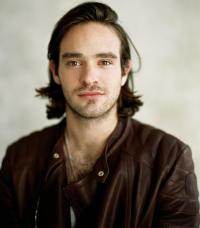 |
Ezvin waited near the edge of the riverwalk where the lights from the carnival bled into the dark water, turning it into a ribbon of gold and color. The air carried the smells burnt sugar, liquor, oil from frying dough, and the faint odor of the river itself. Somewhere behind him, a guitar played a tune that was just a little too slow, just a little too warped to be comforting. He felt good.
Not the sharp, restless kind of good that came from chasing something new, but the smooth, settled confidence of a man exactly where he wanted to be. His coat was warm, scarf loose, hair behaving for once. He checked his reflection briefly in the dark glass of a ticket booth and allowed himself a small, approving nod. Nights like this suited him.
The carnival sprawled away from the embankment like a fever dream. Strings of lights zigzagged overhead. The tents leaned into one another as if sharing secrets. A tarot reader smoked beneath a velvet awning, cards laid out like an accusation.
Further down, a sign promised TRUE GHOSTS, REAL VOICES, and Ezvin made a mental note to check about that later. Across the way, a row of game stalls glowed with impossible optimism, stuffed animals hanging in neat rows like colorful trophies waiting to be claimed.
He slipped his wallet from his pocket, checked the time, and smiled.
He leaned back against the railing and watched people pass: lovers wrapped together, strangers brushing hands, performers in half-costumes laughing too loudly. Ezvin’s thoughts flicked, briefly, to how Cadence had looked earlier that day, all curious and bright, just on the edge of something new. He liked that edge. He liked being there when people stepped over it. He also liked that she’d said yes so easily.
|
|
|
|
| Early morning latte |
|
Posted by: Colette Moreau - 02-10-2026, 10:47 PM - Forum: Business District
- No Replies
|
 |
She hadn’t been sleeping well, which explained why she was already halfway through her second latte. The café buzzed with the low, constant murmur of ambition. Men and women in suits clustered around small tables, voices pitched just above polite, screens glowing with schedules and projections. Corporate types, all of them.
It was only a block from the Radiance Hotel, which served coffee perfectly well, but Colette had still slipped through the lobby early, coat buttoned tight against the winter morning. She needed the feeling of being just another woman at a small table, not watched like a bird in a cage at Radiance.
She had just started composing a message to her mother when her wallet chimed.
It was Evelyn. Colette smiled before she even opened it.
“Darling,” Colette said as the call connected. “It’s wonderful to hear your voice.”
“Colette,” Evelyn replied, genuinely pleased. “You’re up early.”
Evelyn always sounded warm and effortless, as if intimacy was her native language. It gave the impression that they’d been friends for decades, even though their acquaintance was far more recent.
Colette glanced around the café, then back at the screen. “Oh it’s nothing. I’ve been a bit restless lately” Colette said lightly. “And besides, I’m happy to have caught you. How are you holding up? My mother has been worried. I was just about to send her a message.”
Evelyn’s voice softened. “Things have been challenging, but we are going to come through. We have to be patience But what about you? Are you still at the Radiance?”
“For now,” Colette said. “I suspect that won’t last.”
“Awe,” Evelyn sounded sympathetic. “Is everything okay?”
Colette looked away briefly, ready to change the topic. The truth was, she wasn’t sure what was wrong nor why she was so uncomfortable at the hotel.
“It’s a lovely hotel.” She said.
Evelyn’s eyes sharpened just a touch, the way they always did when conversation edged toward substance. “Have you had an opportunity,” Evelyn asked carefully, “to speak with the Ascendancy yet?”
Colette took a sip of her latte, buying herself a moment. “Not formally. We’ve met socially. He was quite cordial.” She chose the word with care. “And I’ve been invited to see him. An appointment is pending.”
Evelyn’s expression suggested both interest and restraint. “That’s quite something, even so.”
“I’m under no illusions,” Colette said. “An invitation is not influence. It’s simply a door left ajar.”
“But one worth stepping through,” Evelyn said. Then, after a few moments she added, “In the meantime, I wondered if you might be open to another introduction.”
Colette’s brow lifted slightly. “Oh?”
“A woman I think you’d find very cordial,” Evelyn continued. “It’s Natalie Northbrook. She’s been building something very practical. Something protective. A place for women like us to work, train, and exist without having to ask permission or apologize for the space we take.”
Colette leaned back in her chair, interest sharpening into focus. “That does sound intriguing.”
“I thought it might,” Evelyn said, smiling. “I believe the two of you could be… very complementary.”
“Yes,” she said simply. “I think I’d like to meet her.”
Evelyn’s smile widened with satisfaction. “Wonderful. I’ll make the arrangements.”
|
|
|
|
| Karim al'Shaidis |
|
Posted by: Karim al’Shaidis - 02-09-2026, 01:12 AM - Forum: Biographies & Backstory
- No Replies
|
 |
More details about bio are on the wiki
Karim Al’Shaidis was born in 2018, in Tehran, into a secular, cosmopolitan family for whom preparedness was a matter of routine rather than ideology. His father worked as a civil infrastructure engineer, specializing in seismic resilience and post-event structural assessment. His mother was a public health administrator, coordinating emergency medical logistics during regional crises. Dinner table conversations were rarely dramatic, but they were practical: load limits, evacuation timing, supply bottlenecks, what failed and why.
His early childhood unfolded during a decade in which earthquakes and aftershocks were no longer singular events but recurring disruptions. His parents taught him to keep his shoes by the door and his documents in order. Not out of fear, but practicality. Order was not a philosophy. It was how people slept through the night. Meanwhile, schools closed, reopened, and adapted. Buildings were rebuilt, then reinforced again. Karim learned early that safety was not assumed. It was maintained.
Quiet and observant by nature, Karim was socially at ease but disinclined toward attention. He listened more than he spoke, absorbed systems before questioning them, and showed a natural patience for slow, methodical work. When others reacted to instability with urgency or fear, Karim responded by narrowing his focus and doing what needed to be done next.
He completed formal education in civil and disaster systems engineering, but it was never the academic side that defined him. He gravitated quickly toward field deployment, working with international stabilization and humanitarian coordination groups operating in regions of prolonged unrest across sub-Saharan and coastal East Africa. His work placed him at the intersection of emergency response, infrastructure stabilization, and civilian coordination.
By his early twenties, Karim was already trusted with on-site authority during volatile operations. He understood how systems broke under stress, but more importantly, how people did. He learned that most disasters were survivable until poor decisions compounded them. That understanding, more than ambition or ideology, kept him in the field long after others rotated out.
It was during one of these deployments, already fully operational and experienced, that he first manifested the ability to channel.
Karim first sparked his ability to channel at age 22. The manifestation was powerful and disorienting, emerging during a protective act in the field that prevented large-scale loss of life. Untrained and wary of the power, he was careful with restraint. He developed a self-imposed block, requiring him to physically endure a sense of weight such as holding something heavy, pressing against an immovable surface, or carrying a heavy load. It was used sparingly, only when it served others, and never for personal gain.
For several years, Karim operated quietly, his anomalous actions folded into the chaos of disaster zones. Eventually, the scale and consistency of his interventions drew the attention of CCD intelligence. He was formally recruited through Michael Vellas, but it was the Ascendancy that secured his commitment, framing the Nine Rods of Dominion as guardians of global stability rather than instruments of domination.
Within the Nine Rods of Dominion, Karim quickly distinguished himself as one of the strongest channelers, surpassed only by Im Seung Jun and Michael Vellas. Yet it was not strength alone that elevated him. He absorbed responsibility when operations went wrong, mediated disputes without theatrics, and made difficult decisions without needing recognition. Michael relied on him to stabilize volatile situations. Others followed because he was fair, controlled, and unwavering under pressure. Despite the lack of formal hierarchy among the eight, Karim became their de facto leader.
Personality
Karim is lawful in the truest sense of the word. He believes conduct and morality exist to protect people, not to excuse harm. Collateral damage justified as “necessary” unsettles him deeply. When such harm occurs, he does not openly rebel or grandstand. He continues to function with precision and professionalism, but he remembers. Trust, once withdrawn, is not often restored.
His driving motivation is not power or legacy, but proof. Proof that the world is actually becoming safer. Proof that restraint, accountability, and protection matter. Proof that the structures he serves reduce harm rather than merely rationalize it.
Karim does not seek command. He does not posture. He stands where systems fail and holds them together long enough for others to survive.
Appearance
Karim stands at 6’1″, his build is lean and athletic in a way that suggests long hours of physical work rather than deliberate bodybuilding. He carries himself with an easy, grounded posture, shoulders relaxed but ready, as if balance and stability are habits he never quite sets aside. His features are sharp but calm: dark, expressive eyes set beneath strong brows, a straight nose, and a clean-shaven jaw that gives him an open, direct look. His hair is dark and worn short, usually slightly unruly, softening an otherwise serious presence. There is nothing flashy about his appearance, yet it draws attention all the same. He looks like someone accustomed to responsibility, fit from use rather than vanity, with a quiet intensity that reads as reliability long before it reads as power.
|
|
|
|
| Fourth Age Past Lives |
|
Posted by: Nox - 02-07-2026, 12:49 PM - Forum: General Discussion
- Replies (33)
|
 |
I have a question. I know some of you have some 4th age past lives. I was wondering what criteria they fall under. Other than the dark one isn't there. It's thriving after Rand saves things, tech and magic are starting to make a resurrgance.
I'm just curious.
I'm considering adding another life to Nox's past lives. One in the 4th age that is a spun out Hero of the Horn. (Though I don't know if it's necessary as Geb might possibly qualify as a hero for the actual things he did before the god wars.) Which I don't actually know if he participated on what side lol.
|
|
|
|
| Monster Manual (CCDPD) |
|
Posted by: Marisol - 02-05-2026, 05:23 PM - Forum: Government Facilities
- Replies (39)
|
 |
”Detective Guerro,” Captain Dolohov’s voice grabbed Marisol’s attention. She entered his office as he gestured for her to do so. ”Get the files together for the case you’ve been working on. The dead man - pale with the burnt eyes. Domovoi is taking it over.”
Marisol sighed in frustration. ”Sir, I’ve been..”
The Captain raised his hand to silence her. ”I know, detective, but you know the regulations. Someone from Domovoi will be here to get the file and evidence. And get ready for a long night. Weather isn’t letting up, we might be stuck here for awhile.”
Marisol was dismissed and she left feeling the frustration deep in her bones. It was a frustration all detectives had at one point or another. You do the work and as things are coming together and then another unit steps in and says they’re taking over. She had worked hard on this case. It had started with a welfare check call. Someone called because their friend had been acting strange - reporting increasing paranoia that he was being stalked. When the friend had lost contact, he’d called for a welfare check. The fire department showed up and had found a corpse.
Marisol had come to the scene. The body had been pale. Almost like it had been drained of blood. The eyes were burnt, but it looked like it had come from the inside. There were other burn marks too, incompatible with the eye burns. There were burn marks around the room in the apartment as well as water stains. Papers were swept around like a wind had blown through it. The smoke detector hadn’t gone off - it had appeared damaged. Marisol had found journals there. The victim had written them. They gave credence to the witness’s story. There were repeated entries that stated the victim had multiple times seen something out of the corner of his eye, but when he looked there was nothing there.
Marisol’s reports had been meticulous. Other detectives gave her a hard time for it sometimes, but DAs loved it. Her cases never got thrown out of court for something as mundane as the evidence was mislabeled. She documented everything: pictures, witness statements, the journals, and the toxicology and coroner’s reports. Some had thought maybe drugs - but the toxicology report was clean. The coroner had been stumped as well, labeling the cause of death as “inconclusive”. Everything was there. The more she dug into the case, the more she felt that the victim hadn’t been paranoid. Something had been following him. Her report didn’t state that yet. It was a gut feeling at this point.
Marisol took the paperwork to the evidence lock up to collect it for the Domovoi people. She’d get everything together for them and have it in order. Some cops didn’t organize it. A small little jab that they were pissed that their case was being taken. Marisol was a team player, and even if she was frustrated, she wasn’t angry. She understood it. She had been a minute away from calling them herself. But even if she wasn’t angry, she couldn’t keep the frustration out of her posture as unbuttoned her suit coat to take a seat and begin to make sure she had everything in order. [/b]
|
|
|
|
| Mitsuki Hayashi |
|
Posted by: Mitsuki Hayashi - 02-05-2026, 04:54 PM - Forum: Biographies & Backstory
- No Replies
|
 |
Mitsuki Hayashi (林 光月)
Full bio on her wiki
Mitsuki Hayashi is Yuta Hayashi’s only acknowledged child. That alone makes her dangerous: irreplaceable, leveraged, potentially breakable. Yuta built his life on patience, opportunism, and a ruthless understanding that tradition only matters when it serves power. He did not raise Mitsuki to inherit; he raised her to endure.
Born in Japan in the early 2020s, Mitsuki spent her childhood moving between Tokyo and Kyoto, always adjacent to Edenokōji-gumi life but never inside it. Her homes were immaculate, curated by invisible hands, while her father’s presence was intermittent. She learned early the difference between respect and fear, which rooms were forbidden, and which conversations died upon her entrance. Questions went unanswered. Observation proved more reliable. Power does not explain itself – Mitsuki learned to watch.
Her body was trained before her mind was trusted. Etiquette and hosting were functional: read rooms, recognise insecurity, note behaviour. Nihon buyō and later Kagura taught discipline, precision, and the language of stillness. Every movement – a tilt, a sweep, a pause – conveyed intent. Mistakes were corrected relentlessly; praise was irrelevant. Dance trained her to assert or dissolve control, to survive under observation.
When the gumi probed Russia in the 2030s, Yuta sent her abroad. Education was the official reason; preparation, the true one. Displacement taught her to be foreign everywhere, to read cultural fault lines, and to survive without belonging. Japanese, English, and Russian became tools of inheritance, survival, and preparation. Observation remained her skill: her value grew not from secrets but from understanding how people behaved when no one important was watching.
Dance evolved alongside her. Away from Japan, nihon buyō became a tool of control; Kagura, internal grounding. She added contemporary, butoh, ballet, and physical theatre, mastering weight, balance, release, and presence. Her movement defied categorisation: precise but fluid, disciplined yet unpredictable. To observe Mitsuki was to confront both grace and intent; her dances became a language of influence.
As she matured, Yuta allowed the gumi to notice her — not as a negotiator, enforcer, or heir, but as a presence. She attended dinners, seasonal observances, and cultural events without explanation. Initially dismissed as ornamental, she became a silent measure of accuracy: careless remarks resurfaced inconveniently, tone shifted subtly in her presence, and those who underestimated her learned that nothing spoken near her vanished. Her influence was informal, deniable, and therefore untouchable.
Within the Edenokōji-gumi, Mitsuki’s position is ambiguous but potent. She holds no formal authority, yet her proximity to Yuta confers immediate weight. Senior members respect or resent her subtle influence; younger members mythologise her. She is underestimated at first – ornamental, inconsequential – and then unavoidably relevant. She is both inside and outside the gumi hierarchy: too close to ignore, too distant to confront, a living gauge of truth and consequence. Her presence alone shifts dynamics; her composure communicates more than rank ever could.
Her dance – later known as Tsuki no Mai – became central to her mythos. Rare, restrained, deliberate, it rearranged rooms without spectacle. Rumours spread: that when she danced, someone’s fate was already decided; that her movements marked the condemned; that violence or correction followed in her wake. Observers debated the meaning. Outcomes – collapsed deals, realigned alliances, tempered rivalries – followed patterns they could not trace. Some feared her, others revered her; all treated her presence differently. Mitsuki did not decide fate; she revealed it. Each performance was tuned to the room, oscillating between playful irreverence and cold precision. Arrogance softened; tension dissolved; hierarchy subtly shifted. Tsuki no Mai existed at the edge of control, a living negotiation rendered in movement.
She performs only when stakes justify it: to unsettle, recalibrate, or remind others that the Oyabun’s blood is present. Rarity preserves potency. Freedom, she learned, is not given; it is allowed if one remains useful without inconveniencing power. Her dances are both shield and instrument, her body her armour and language.
Yuta brought Mitsuki to Moscow in 2047, after the first Companion Clubs opened. In Tokyo, she might have been married off by now, preserved as a symbol. In Moscow, where tradition is optional and the rules are flexible, she has become something else entirely: a strategic asset. Her presence signals that Yuta believes in the project enough to put blood near it.
Appearance and Personality: Waist-length black hair, framed shorter around her face. Dark eyes. People notice her movement first: the quiet certainty with which she enters a room, the way she seems to settle into a space as if it were already hers. She does not rush. She does not hesitate. Her steps are measured, economical, almost ceremonial, the product of years of training.
Her stillness is unnerving – not passive, but watchful. When she turns her attention to someone, it feels intentional, as though they have been selected rather than noticed. When it withdraws, it leaves a noticeable absence.
Mitsuki rarely gestures unnecessarily. When she does, it carries weight: a slight inclination of her head, a pause before responding, the controlled movement of her hands. These are not habits but choices, each one calibrated to influence the rhythm of conversation or the emotional temperature of a room. Discipline never fully leaves her body. She sits and stands with intention, moves with awareness, and rarely forgets where she is or who might be watching.
Joy exists in her, though many miss it at first. It surfaces as dry humour, fleeting smiles, or moments of quiet amusement when certainty overreaches itself. There is a quiet refusal to treat power with solemn reverence. She avoids overt cruelty and dislikes unnecessary violence, but she does not mistake restraint for kindness. She will not raise her voice or threaten outright; instead, she lets others expose themselves. Trust is rare and earned through consistency not charm.
In private, she is more human than her reputation suggests: dryly humorous, reflective, occasionally playful. She is capable of warmth and unexpected gentleness, especially toward those who are uncomfortable, displaced, or out of place. She does not offer protection lightly. But when she does, it is absolute.
Dance is her personal joy, and her rehearsals alone are often improvised, irreverent, and unfettered: technical mastery the world is only allowed to glimpse, for she never reveals it in full. These private moments fuel the discipline she projects to the world. Public performance is never indulgence; it is only influence. Alone with her art is the only time she feels free.
Mitsuki does not seek dominance. She seeks continuity – to remain present, relevant, and difficult to remove. Dance taught her how to occupy space without command, how to influence outcomes without speech, and how to survive under constant observation. In Moscow, where attention is both currency and danger, that quiet mastery is her armour – and her power.
|
|
|
|
|