Posts: 116
Threads: 11
Joined: Jan 2020
Reputation:
0
Options:
- Prophet
- Dreamwalker
- Civilian
All Accounts Posts: 1,737
Linked Accounts
After the trials in Norway, His Holiness returned to Rome in solemn procession, though none but those closest to him would have called it retreat. Within the ancient stone of the Vatican, beneath gilded ceilings and the low murmur of sacred chants, Pope Patricus I found a season of stillness. It was Christmastide, and though the liturgical calendar ran on as ever it had, the weight upon his shoulders did not lift.
The memories of Norway and Siberia clung to him like incense after Mass. The Key of Cunning lay buried deep within the Apostolic Archives now, classified among relics whose natures were best left unquestioned. Yet it called to him. Not with words, not even with thought, but with the subtle allure of something unfinished. He resisted, as was expected of him and as was required. That such a temptation could arise at all was troubling. That he felt it was worse.
Armande had fallen into silence in the weeks that followed. The women who accompanied him spoke little as well, offering weariness as excuse and solitude as shield. Armande himself spoke often of patience, with all the gravity of a cardinal instructing a novice. Patience! To the Pope himself. One of the Fruits, he had called it. The absurdity of it sparked a glare had it not also rung true in some distant corner of Philip’s soul.
And yet, patience was no balm. The other keys remained hidden, scattered like seeds on unbroken ground, and Philip knew without evidence or reasoning that they must be found. That they must not fall into the wrong hands. Whether it was instinct or something more, he could not say. Only that the sense of purpose had not left him.
Rome swelled with celebration in those holy weeks. Chorales rang out beneath the dome of Saint Peter’s; pilgrims crowded the piazza like waves pressed against the shore. Then, as Epiphany gave way to Ordinary Time, the announcement came: the Pope would journey to Moscow.
Not a summons nor an obligation. A choice. It would be his first meeting with the Ascendancy; a public gathering, one announced with careful language and diplomatic tact. Many had asked for such a meeting before; all had been denied. Until now.
The Ascendancy could not know the truth behind the change. But Philip was ready.
Man is like God: he never changes.
Posts: 919
Threads: 164
Joined: Jun 2013
Reputation:
0
Reborn God: Hades
Channeler Current Strength: 42
Channeler Experience Level: Master
Channeler Potential Strength: 42
Options:
All Accounts Posts: 1,737
20 Attached Accounts
It had been ten years. Ten long winters and as many muted seasons since last the Kremlin had dispatched an invitation to the Apostolic Palace. As before, it had been addressed with full ceremonial flourish, embossed with seals, signed in the proper form. And as before, it had been met with silence more resolute than denial.
Which was why, when at last a reply came, and not merely a reply, but an acceptance, the corridors of the Kremlin stirred like a hive disturbed. What had moved His Holiness, Patricus I, to cross beyond the walls of his sacred city-state, none could say. He was a pontiff known more for stillness than for spectacle, a man whose presence had become synonymous with the Eternal City itself. Rumors whispered of his recent sojourns into the North Norway, possibly even Siberia, but the nature of those travels was as clouded as the breath of men in winter air. The Ascendancy's advisors speculated that it was not diplomacy that called him forth, but something far more political.
Nikolai, for his part, cared little for the cause. Let the man come. The Custody, predictably, had taken to the task with overzealous fervor scheming to frame the Pope's visit as a gesture of deference to the Ascendancy, or at the very least, a recognition of its dominion in all matters worldwide.
But the CCD, outside the mutterings of the Brotherhood of Ascension, had never concerned itself with the trappings of religion. Not openly. Not since the DV affair years prior though that had been less about theology and more about rebellion.
It was Myshelov who insisted on the second invitation to the Brotherhood’s Luminar. It was a subtle move and carefully played. Nikolai had met the man once: a formal greeting, a carefully staged photograph, and a handful of words traded like passing smalltalk. Left to his own judgment, Nikolai would have let the matter lie. But with the Vicar of Rome arriving in Moscow, the game had shifted.
The two poles of the spiritual world, one ancient and encumbered by centuries, the other fervent and forged anew would meet at last. Now that would be a sight worth watching.
Posts: 16
Threads: 2
Joined: Nov 2024
Reputation:
0
Reborn God: Ra
Channeler Current Strength: 26
Channeler Experience Level: Expert
Channeler Potential Strength: 26
Options:
- Channeler
- Prophet
- Di Inferi
All Accounts Posts: 1,737
Linked Accounts
The summons came not by courier, nor wrapped in a seal, but through an encrypted channel. Its authority made plain not by the message itself, but by the voice that soon followed it. Myshelov Tarasovich. Patron of Dominance I.
Theron had spoken with him before, but always in private, never in light. Their acquaintance was a secret even from those who imagined themselves well-informed. In public, the Brotherhood and the Custody were separate entities, touching only in rhetoric. In truth, the Patron’s hand fed the Brotherhood’s accounts more than any would guess, and more than any ledger could safely record.
But the invitation? The Kremlin? That surprised even him.
The image of Myshelov flickered into being across Theron's desk: sharp-featured, poised, wearing a smile that held no warmth.
“What, then is the true purpose behind this summons?” He inquired, head held high.
The Patron offered a soft laugh, barely more than breath. “What you do not yet know is this: you will stand before the Ascendancy in the same audience as the Pope. You will be presented together. Two figures of faith. As equals at least in the Ascendancy’s eyes.”
For a moment, Theron was speechless. Such moments were rare.
A thousand implications flared through his thoughts, each branching into a dozen more. The Brotherhood existed in but only barely acknowledged. Now? Now the world would see. The spirit would glance at the sacred. And the sacred would glance back. And in between them both, the Luminar. Him.
“I will bring three,” Theron said at last. “One officer of the Brotherhood and two Veilwardens.”
Myshelov’s expression did not change, but the shake of his head was final. “Three is one too many. Two. That is the maximum.”
Theron frowned slightly, though the Patron would not see it in the usual way. The projection left much to be desired. Still, he could not argue with that polite, direct, and immovable tone.
“Two,” he agreed.
When the connection ended, Theron summoned Lucien with a thought. The man would be ready.
As for the second... that required thought. Quillon had the skill. Steady, fierce, a wall in the shape of a man. But balance mattered. The court of the Ascendancy was a mysterious place. Seraphis, though less naturally talented in politics, had something better than insight. She was a woman, and could sense things that he could not. Besides, she had once been his ward, and though sentiment had no place in decision, Theron would not pretend he was made of stone.
Yes. She would do.
Quillon could remain behind, in command by absentia.
Posts: 9
Threads: 1
Joined: Dec 2025
Reputation:
0
Reborn God: Leuce, Guinevere
Channeler Current Strength: 10
Channeler Experience Level: Expert
Channeler Potential Strength: 12
Options:
All Accounts Posts: 1,737
Linked Accounts
Seraphis did not run to the Luminar’s summons. She moved with purpose, but something inside her unspooled just slightly at the thought of being called to his presence. Not Lucien. Not another summon to brief a Veilwarden call. Her. Summoned by him.
She told herself it was because of her reports training Nora. The Ember had drawn praise from everyone, even those who did not hand out praise as lightly as breath. It must be that. It ought to be that.
Still, she paused outside the door, smoothing the pale fall of her hair behind her shoulders and checking her cuffs with unconscious precision. One breath. Then another and composure slid over her like armor.
She knocked once—firm, not sharp—and entered at his call.
"Ah, Seraphis. How are you, my dear?"
He always said it that way. Warm, distant, and unthinking, but it was enough to stir something beneath the calm she wore like her Veilwarden dress. She inclined her head.
"Very well, Luminar. And yourself?" Her voice was steady and trained, the voice of someone who’d once been a ward and was determined never to be mistaken for one again.
He gestured to the chair opposite him, and she took it without hesitation, spine straight, hands folded. The study smelled faintly of sage and the old paper of restricted texts. His presence filled it like incense.
"I have news," he said, steepling his fingers. "I have been invited to an audience with the Ascendancy at the Kremlin."
That stilled her thoughts for a moment. The Kremlin. She had passed its walls a hundred times, its spires gleaming like spears held against the sky. But she had never been within.
"Lucien will accompany me," Theron went on. "And I have decided to bring you as well." Her breath caught only a little, only inward, but her eyes widened before she mastered them.
"I require a certain perspective,” he continued. “One I believe only you can offer."
She nodded, once. Not too eager. But her heart still thudded like a drum beneath her ribs.
"Of course, Luminar. Whatever you need."
She would not ask why. She would not speculate aloud. That was not what was required of her. But behind her composed expression, a hundred thoughts moved like shadows behind a veil.
Posts: 116
Threads: 11
Joined: Jan 2020
Reputation:
0
Options:
- Prophet
- Dreamwalker
- Civilian
All Accounts Posts: 1,737
Linked Accounts
The day of the Summit dawned as all Moscow days seemed to: iron-gray and unmoved by prayer. Cold pressed against the windows of the motorcade like an accusation, and the sky hung low and colorless, as if the world itself had drawn a breath and chosen not to release it.
Philip missed Rome.
He missed the sun warming the walkways, the familiar echo of footsteps in halls that had known emperors and martyrs alike. He missed the quiet certainty of home. As the motorcade passed beneath the walls of the Kremlin, massive and unyielding, he felt the distance keenly. This place was old, yes. But age alone did not make something venerable.
The Kremlin was a fortress. A bulwark. A thing built to endure siege and repel force. It lacked the sanctity of devotion, the layered holiness of centuries bent toward God rather than power. Compared to the Apostolic Palace, it was a blunt instrument: imposing but empty of grace.
Philip allowed none of these thoughts to show.
A veil obscured his expression as he was ushered inside, his face composed into the serene mask expected of the Bishop of Rome. Disdain, when it came, must be hidden beneath courtesy. He had learned that lesson long before the Keys, long before prophecy had begun to trouble his sleep.
My audience, he thought as he was shown to the chambers prepared for him. The phrasing amused him, faintly. It was the Ascendancy who would have audience with him. He had not come because he was summoned. He had come because he had allowed it. Yet it was time.
The Key of Cunning lay sealed in the deepest vaults of the Vatican Archives, wrapped in classification and prayer both. Even now, he could feel its absence like a space where a tooth had been pulled. The world was shifting. Lines once clear had blurred. Children like Thalia were being drawn toward idols fashioned not of gold or stone, but of influence and spectacle. Souls, wandering unguarded. He had seen what came of that. Is this the end of days? he wondered, not for the first time. Philip had not come merely as a diplomat. He had come because the dream had returned, unchanged. Because prophecy was not a thing one ignored simply because it was inconvenient.
Today required balance.
He would stand as both Pontifex Maximus and sovereign prince. His presence would remind the world that the Holy See was not merely a faith, but a state older than most nations dared remember. His vestments were chosen accordingly.
The red velvet mozzetta, trimmed with winter ermine, rested upon his shoulders like a mantle of history. Beneath it, the rochet of linen white and meticulous craftsmanship marked the business of state rather than the intimacy of pastoral care. The pectoral cross hung heavy against his chest, suspended from braided gold and crimson cord, its weight familiar and grounding against his heart. The fascia ended in gold-tasseled knots, an echo of ceremonies long abandoned by those who mistook simplicity for humility.
And upon his feet, the red shoes. Louboutin made. The Gentlemen of His Holiness flanked him, followed by cardinals in piano dress, their black cassocks edged in scarlet like restrained flame. Cameras followed every measured step as he moved through the Grand Palace, the murmur of media held at bay by marble, discipline, and awe.
Then the doors opened.
The old throne room of the tsars stretched before him. Protocol had been observed, he noted, precisely, even deferentially. Chairs stood side by side at the foot of a dais, equal in height, equal in placement. Above them loomed the ancient throne itself, elevated and unused, a relic of dominion past. Though rumor said the Ascendancy did in fact use it. But what drew Philip’s eye was not the throne itself. It was the sigil behind it.
The emblem of the CCD dominated the wall. It was modern, assertive, and unmistakable. His gaze sharpened, though his expression did not change. He approved of the honesty, at least. Power that pretended not to be power was the more dangerous kind. But power over men was eclipsed by the power of God.
Then he noticed the third chair.
His breath did not falter. His stride did not slow. But something inside him stilled, like a pond touched by the first hint of wind.
So, he thought. This is how they mean to play it.
As his full titles were announced, Patricus I stepped forward, alone, down the long center of the hall. The sound of his footsteps carried toward the figure waiting at the far end.
Man is like God: he never changes.
Posts: 919
Threads: 164
Joined: Jun 2013
Reputation:
0
Reborn God: Hades
Channeler Current Strength: 42
Channeler Experience Level: Master
Channeler Potential Strength: 42
Options:
All Accounts Posts: 1,737
20 Attached Accounts
Nikolai was halfway to the reception hall when Viktor, his chief of staff, intercepted him with a flick of the wrist; a signal honed by years of protocol and necessity.
"I'm told it's the weather," Viktor said, eyes scanning a data pad scrolling with live feeds, atmospheric scans, and predictive models. He offered it, but Nikolai only glanced. His expression remained fixed. Displeasure carved into ice.
"He’s doing it on purpose," Nikolai said, voice low. “A show of strength, veiled in convenient circumstance. Communicate to the motorcade that this delay is unacceptable. Continued lateness will be interpreted as disrespect.”
Viktor gave a sharp nod, already turning to relay the order, but paused. “Understood. Though… the city has begun closing roads outside the Third Ring. Snow accumulation is worse than forecasted.”
He showed Nikolai the figures. The Ascendancy’s eyes narrowed.
“What are you saying?”
“Perhaps—” Viktor hesitated, rare for him, “—you should consider canceling the summit.”
Tempting. To let the moment collapse before it even began, to let the Vatican stew in its own sense of self-importance. But no. That would be weakness, and the Pope would use it to his advantage somehow spinning sympathy for himself.
“No,” Nikolai said. “The summit proceeds. Inform Myshelov: I want every road between the Vatican motorcade and the Kremlin cleared. No traffic. No citizens. No obstacles.”
“Of course, Ascendancy.”
Orders dispersed like ripples through water. Even as he continued on, Nikolai’s thoughts lingered. He was told the Brotherhood’s delegation had already arrived and was awaiting formal greeting. He considered making an appearance, but decided to let them wait.
As he passed a tall arched window, snow spiraled past in heavy sheets, dense and endless. The sky above Moscow had become the color of stone. It was noted, but not particularly memorable.
When the Pope finally arrived, the great hall had already been readied.
Nikolai stood at the foot of the old Tsar’s throne, positioned in front of the central seat, where protocol placed him for all international ceremony. The press corps lined the edges of the chamber, feeds streaming in silence.
Patricus I entered without announcement.
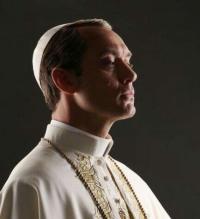
And not in the gilded opulence Nikolai had anticipated. No jeweled mitre, no fluttering cope or golden crozier. The mozzetta was present, red velvet and ermine trim, as tradition demanded, but his overall appearance was… restrained. Traditional, yes, but not theatrical.
What struck Nikolai most was the veil, or rather, the lack of it. For over a decade, the Pope’s face had only been seen through a transparent veil; ever a symbol of divine separation, mystery cloaked in humility. But now, the veil was gone.
And the man revealed beneath it was poised, calm, handsome even, with eyes like still water over something fathoms deep. He was younger than Nikolai expected, though he was aware of the man’s age. It was strange, after all these years, to finally see the face of a man nearly as known to the world as himself. They were both from Baltimore, he recalled to some amusement.
Patricus came to a stop, precisely centered in the hall. For a long breath, they regarded one another, beneath the weight of watchful eyes and held breath.
Let the world wonder who would speak first.
Nikolai did.
"Your Holiness," he said, stepping forward, “it is a historic honor to welcome you to our capital. Our doors are open to you.” The words were rote with custom.
With that, he offered his hand. The gesture was not merely courtesy; it was symbolism and recognition. The Sovereign of the CCD extending the same deference he might offer to another. Vatican City was a dot on the map, a pinprick amid empires, and yet the clasp of hands said: you still matter.
Patricus accepted the hand, but his voice, when it came, was cool and careful. “The Successor of Peter is grateful for the hospitality shown by your nation.”
It was formulaic and intentional. A veil in words, since the cloth had been discarded.
They turned, each to their seats.
As Patricus approached his, one of the Gentlemen of His Holiness stepped forward, placing a discreet papal cushion atop the seat just enough to ensure the Pope sat at equal height to the Ascendancy. Nikolai watched the maneuver with inward amusement. He did not stop it. Symbols mattered, even the petty ones.
But Patricus did not yet sit. His gaze moved past Nikolai, toward the third chair. And there it was: the pause.
Nikolai did not miss it. He answered the question implied by the silence.
“I hope to honor you by making another introduction,” he said, gesturing.
The great doors opened.
A figure entered. He was lean and robed in various shades of dark colors, black and gray, with orange-gold thread glinting subtly through the cascade of his formal cloak. He walked with confidence, face half-shadowed under the grand lights.
“The Luminar of the Brotherhood of Ascension.”
There were gasps among the press corps.
Nikolai glanced sideways. Patricus’ expression revealed nothing. But in that long second of unreadable stillness, Nikolai wondered curiously:
Will he walk out?
Posts: 9
Threads: 1
Joined: Dec 2025
Reputation:
0
Reborn God: Leuce, Guinevere
Channeler Current Strength: 10
Channeler Experience Level: Expert
Channeler Potential Strength: 12
Options:
All Accounts Posts: 1,737
Linked Accounts
Seraphis barely slept.
She’d spent most of the night staring at the ceiling of her room, willing herself into stillness, then finally giving up and throwing the sheets off with a huff. Centering exercises, breathing techniques, silent meditations. None of them calmed her.
So she embraced the wakefulness. She dressed early, checked her notes three times, and still arrived at the exit a full thirty minutes before the Luminar and Lucien. Waiting in the corridor alone, she pressed her gloved fingers together, trying not to fidget.
The gloves helped. At least it helped cover up her nerves.
The car ride passed mostly in silence. Theron and Lucien spoke in low voices behind her, but they weren’t directed at her. Outside the tinted windows, the world was pale with early morning frost. Snow fell in a slow, reverent hush.
Today was the summit. Everyone was anticipating the Brotherhood’s public summit with not only the Ascendancy, but the Pope of the Catholic Church as well. This was the day the Brotherhood was formally acknowledged; and all but placed on equal footing with a worldwide religion. And she was going to witness it firsthand.
By the time they arrived at the Kremlin, snow had begun to accumulate, frosting the high red walls and softening the edges of the courtyards. The flakes caught in the air like falling ash from some silent altar. Seraphis lifted her chin, resisted the urge to spin in the snow like a child. Instead, she straightened her spine, smoothed her already-smoothed hair, and stepped into the grandeur. The palace interiors swallowed her.
She’d seen images, watched feeds, and studied diagrams, but none of them had prepared her. The scale of it was overwhelming. Vaulted ceilings, mosaics that danced with gilded light, archways like ribs of some ancient god. The air itself felt charged, humming with a history too vast to hold.
Composure, she reminded herself. She caught sight of Theron just ahead. His expression was always measured, his gaze always steady, and mimicked his posture as best she could.
They were all dressed for ceremony. The Luminar wore his traditional robes, their long sleeves trailing like banners behind him as he walked. The fabric was deep black, but threaded with flickers of orange and gleams of metallic thread. The colors seemed to shimmer when he moved, not bright, not ostentatious, but alive. Like he himself was a work of art.
Lucien was, as always, immaculate. Tailored lines and perfect poise. His look gave nothing away. It never did.
But Seraphis wore something special.
The night before, Theron had presented it himself. “For the First of the Veilwardens,” he’d said. She had opened the box, and the breath had fled her lungs.
The dress was heavy. That was her first thought. Dense with detail, rich with intention. The garment shimmered with a scale-like pattern of glass beadwork and matte gold sequins, each tile-like embellishment catching the light and holding it. Jewels, real ones, were set into bracelets, a collar, and a belt. Subtle variations of sapphire, citrine, onyx, amethyst. The entire ensemble evoked ancient priestess and modern royalty, as if someone had woven a galaxy into a ceremonial gown and called it modern day couture.
"Are these... real?" she'd asked, lifting one of the adornments between uncertain fingers.
"Yes," Theron had said. "A loan from a friend. I’m told it’s worth more than the Sanctuary itself." He’d smiled faintly, equal parts irony and warning.
Then he'd kissed her cheek and said: “You deserve it. And more. Walk proudly tomorrow.”
And so she walked proudly.
Behind Theron. Beside Lucien.
When the Kremlin official signaled it was time, they entered the throne room not through the grand doors at the far end, but from a side passage. Even that small difference was part of the script. And then she saw them.
The Ascendancy himself stood at the foot of the Tsar’s throne, bathed in the warm cast of light from the symbol behind him, a symbol she had only ever seen projected, now wrought into black, gray and orange and mounted high.
At first glance, he could have passed for a businessman. A tailored suit. A confident stance. But the symbol’s glow kissed his shoulders, and suddenly he was more than a man. Power framed him like a crown.
Her gaze shifted to the Pope.
He was draped in white and trimmed in crimson. His garments looked as though they'd stepped out of a stained glass window all formal, radiant, and impossibly pristine. His presence hummed with ritual, centuries of weight wrapped into each fold of cloth. And yet... he was watching Theron. Both men were. Not her. Not Lucien. The Luminar.
Seraphis swallowed, her heartbeat rising until it seemed it might burst through the jeweled collar she wore. Her hands felt suddenly hot in their gloves.
Theron, she thought. And the words came like prayer, not spoken aloud but pressed into the folds of her spirit.
This is where you belong.
Posts: 116
Threads: 11
Joined: Jan 2020
Reputation:
0
Options:
- Prophet
- Dreamwalker
- Civilian
All Accounts Posts: 1,737
Linked Accounts
He was burning with anger, though none would see it behind the practiced stillness of his expression. Not the Holy See, not the gathered press, not even Brandon himself. But beneath the folds of white and crimson, the Bishop of Rome boiled.
How dare he.
How dare the Ascendancy defile the moment by reducing it to spectacle. By seating a false prophet beside the Apostolic Throne. How dare he dilute the Faith with idolatry, cloaked in ceremony and wrapped in attention.
Philip did not recognize the party as they entered, but he knew them at once for what they were. The robes. The colors. The walk of people who thought themselves chosen. And at the center of them was the young man, the Luminar.
That name alone stirred bile.
Light-bringer. A title once borne by an angel cast into fire. Brandon knew what he was doing. He had summoned the Vicar of Christ to share a hall with a man who claimed divinity not from heaven, but from the presence of the Ascendancy. A man whose followers worshipped a mortal.
Blasphemy, Philip thought. And I must endure it.
He kept his gaze forward, fixed not on the Luminar, but on the seat prepared for him beneath the Tsar’s throne. He did not look at Brandon. He did not look at the press. His steps were steady, solemn, and heavy with significance. His presence alone was rebuke enough.
He paused before his chair. Its height was modest, but made equal by the cushion of red velvet placed there by the Gentlemen of His Holiness, perhaps even an inch higher. Never had that small addition felt so weighty, so necessary. Only when he had composed himself did he turn.
The Luminar stood where custom demanded he be acknowledged. He was younger than expected, but with a gaze that bore into the room like a flame in glass. There was depth there, but all blindness and no holiness. Only self-certainty.
Philip bowed his head. Precisely enough to mark diplomacy and no more.
“Reverend Sir,” he said, each syllable carved from marble. To use the title he claimed would acknowledge its legitimacy. That was something Patricus I could not do. “May peace find you, and truth guide your path.” No surer rebuke had ever been uttered.
Then he turned, cassock whispering around his ankles, and took his seat well aware of the eye of the cameras upon him. He glanced toward the Luminar’s companions, two figures who shadowed him as the Gentlemen did the Pope.
Philip folded his hands atop his lap. The silence stretched. Then, at last, he looked at Brandon.
Man is like God: he never changes.
Posts: 919
Threads: 164
Joined: Jun 2013
Reputation:
0
Reborn God: Hades
Channeler Current Strength: 42
Channeler Experience Level: Master
Channeler Potential Strength: 42
Options:
All Accounts Posts: 1,737
20 Attached Accounts
With each formally greeted, Nikolai walked to a podium to deliver his opening statement.
“Your Holiness, Luminar, distinguished members of the press and honored delegates: today we gather as stewards of a world that no longer fits within the boundaries of its former certainties.
The CCD faces pressures unknown to prior generations, technologies reshape the human condition, and phenomena once dismissed as myth now stand before us as lived reality. The CCD has long maintained that stability is born not from denial, but from recognition, and that power, wherever it manifests, must be met with order and responsibility.
Let this summit mark the beginning of a candid exchange between sovereignty, faith, and emerging revelation, so that our world may not be divided by fear of the unknown, but guided through it with discipline, clarity, and resolve.”
Posts: 116
Threads: 11
Joined: Jan 2020
Reputation:
0
Options:
- Prophet
- Dreamwalker
- Civilian
All Accounts Posts: 1,737
Linked Accounts
02-28-2026, 06:26 PM
(This post was last modified: 02-28-2026, 06:32 PM by Patricus I.)
Outwardly, the Ascendancy sounded measured, rational, and almost statesmanlike. Inwardly, Philip would note three things immediately.
First was the language of control: Recognition. Order. Discipline., stewardship of power.
That was not the language of faith. That was the language of empire, though it should not have surprised him. Rome once spoke that way. Every empire spoke of power framed as necessity.
The Ascendancy was at least intellectually honest. But neither did he submit it to moral authority beyond the state. That troubled him deeply.
You are attempting to domesticate what you do not control. You believe you can.
There was also be a flicker of recognition. The Ascendancy spoke of a world reshaped, of phenomena now undeniable. Philip has seen the same shift. The dreams. Norway. Siberia. The Key. It was undeniable.
He hated to admit that the Ascendancy was not wrong about their current age, but stability is not always the highest good. Truth always was, and it was more obvious than ever that the Ascendancy was positioning himself as above truth. Which was far more dangerous.
He then gave his opening statement.
“I am grateful for the hospitality extended to the See of Peter and mindful of the weight such a meeting carries in the eyes of the world. For centuries, the Church has walked beside humanity through ages of upheaval, scientific discovery, and spiritual trial, seeking always to discern the hand of Providence amid change.
We find ourselves again at such a threshold. There are gifts and capacities now evident among us that challenge old language and familiar categories, yet truth is not diminished by new understanding, nor does faith retreat from reality.
If there are men and women who bear extraordinary abilities, then they too are creatures fashioned by God, accountable to conscience and called to the service of the common good. It is not fear that must guide us in this hour, but discernment, charity, and an unwavering commitment to human dignity.”
Man is like God: he never changes.
|





![[Image: hiclipart.com_-e1597513863757.png]](http://thefirstage.org/wp-content/uploads/2020/08/hiclipart.com_-e1597513863757.png)
![[Image: Theron-avatar.jpg]](http://thefirstage.org/wp-content/uploads/2024/11/Theron-avatar.jpg)

![[Image: Seraphis-signature.jpg]](https://thefirstage.org/wp-content/uploads/2025/12/Seraphis-signature.jpg)