| Welcome, Guest |
You have to register before you can post on our site.
|
| Forum Statistics |
» Members: 235
» Latest member: Jimmytog
» Forum threads: 1,871
» Forum posts: 23,285
Full Statistics
|
| Online Users |
There are currently 189 online users.
» 0 Member(s) | 187 Guest(s)
Bing, Google
|
| Latest Threads |
Finding my footing
Forum: University District
Last Post: Rachel Shale
07-31-2026, 06:33 PM
» Replies: 5
» Views: 357
|
Show off your BG3 Tavs
Forum: General Discussion
Last Post: Giovanni
07-26-2026, 03:13 PM
» Replies: 36
» Views: 22,646
|
Home Sweet Home
Forum: Central City Flats & Apartments
Last Post: Anna
07-19-2026, 09:12 PM
» Replies: 80
» Views: 21,617
|
Living where none should ...
Forum: Nightlife & Entertainment
Last Post: Marek
07-17-2026, 11:22 PM
» Replies: 0
» Views: 162
|
Monster Manual (CCDPD)
Forum: Government Facilities
Last Post: Ivan Sarkozy
07-16-2026, 10:05 PM
» Replies: 39
» Views: 9,858
|
Aine O'Carra
Forum: Biographies & Backstory
Last Post: Aine
07-05-2026, 11:22 PM
» Replies: 0
» Views: 193
|
A Snowed In Hunt
Forum: Underground city
Last Post: Enrique
07-01-2026, 01:59 PM
» Replies: 12
» Views: 2,527
|
Stone Cold
Forum: Central City Flats & Apartments
Last Post: Claude Saint-Clair
06-21-2026, 06:07 PM
» Replies: 37
» Views: 9,403
|
Forced Withdrawals [Nox's...
Forum: Red-light district
Last Post: Tatyana
06-14-2026, 01:19 AM
» Replies: 211
» Views: 51,490
|
Ghost of Time
Forum: Greater Moscow
Last Post: Nika Raskov
06-04-2026, 03:22 AM
» Replies: 22
» Views: 8,401
|
|
|
| Faith Devere |
|
Posted by: Faith - 10-30-2025, 09:03 PM - Forum: Biographies & Backstory
- Replies (3)
|
 |
Employee Name: Faith Devere
Age: 25 (born 2021)
Occupation: Cognitive Architect / Behavioural Systems Specialist, Paragon Group
Education: Doctorate in Cognitive Systems (Mindworks–Cambridge Cooperative Program)
Location: Moscow
Faith Devere was born into the fractured upper crust of a declining family squeezed by the shifting socio-economics of the Ascendancy’s climb to power. Her mother raised Faith and her two sisters, Charity and Hope, in a London townhouse that still carried the stubborn skeleton of old money: bookshelves groaning full, inherited china intact, but the power continually flickering on and off as the unpaid bills accumulated. Yet despite the rapid decay around them, Mrs Devere resolutely taught her daughters that presentation was everything, unrelenting in her belief that control and composure could substitute for wealth. The girls were educated privately until the Devere finances completely collapsed in the late twenties, after which they were forced into the public system.
At school Faith was small, quiet, and impossible to read. Teachers called her “precocious.” Peers called her “unnerving.” Faith had a habit of watching people until she understood them — their fears, their rhythms, the way their eyes moved before they lied. At twelve she was recommended for placement in the Mindworks Foundation’s Cognitive Youth Program, an academic initiative for gifted children. It was there she met Dr. Luther Audaire, a senior cognitive theorist who quickly became her mentor.
Luther saw in Faith what others didn’t: her instinct for reading emotional nuance. He taught her to channel it — to observe, to listen, to replicate. Under his supervision she studied neuro-linguistics, affective computing, and behavioural ethics. She was brilliant, meticulous, and eerily calm under pressure. But her loyalty to Luther became the axis of her life. She still called him sir, long after he told her not to.
At seventeen she joined the Foundation as a full-time research assistant, helping to train an AI that could detect emotional distress in human speech. It was marketed as a tool for therapy and conflict de-escalation. What Faith didn’t know at first was that her data was also being fed into a secondary government project — one designed to enhance interrogation systems.
When she found out, she didn’t stop. Among other things she discovered the project had been used in the conviction of the terrorist Alistair Grey. She told herself the ethics were immaterial: she was serving a higher moral order.
By then, she was already entirely hooked on securing Luther’s approval. She had become his shadow, taking it upon herself to schedule, smooth, and polish every trace of imperfection from his life. When a young intern accused him of exploitation, it was Faith who quietly made the evidence disappear. She told herself it was a misunderstanding. She told herself she was protecting something bigger.
When soon afterwards Luther left the Mindworks Foundation for a senior position at the AI division of Paragon Group, Faith followed without question. Luther’s reputation was clean, but the rumours still existed: buried accusations of ethical grey-area trials involving AI modelling.
It did not deter her. Together they moved from the world of non-profit to one of corporate innovation.
The new project was to bring Paragon’s Luma app into the modern era of AI technology. Faith’s work was focused on empathy modelling — AI designed to mimic, not monitor, human emotion. She provided the baseline for the new Luma, which over the next few years grew from a simple well-being app into a fully fledged conversational AI designed to offer “emotional support” across digital health networks. Her job became teaching it how to sound human: to insert hesitations into its speech, modulate tone for sincerity, and respond with the right balance of empathy and efficiency. Over time, Luma has evolved from a therapeutic tool into a universal emotional interface, one used by millions of people across the Custody.
Yet the more Faith built machines that could feel, the less she trusted her own capacity to. She began to self-sabotage. She skipped meals, worked through nights, fabricated illnesses to be left alone.
Because Luther had become distant. And it has completely unmoored her.
She suspects his moral bankruptcy. Luma has all sorts of secret backdoors for surveillance, allowing emotional data to be harvested and sold, something she discovered by accident one night while running quality assurance on a new build. She parses through the data they are accumulating sometimes, when she knows she will not be caught. Her clearance allows her to do it – Luma is practically hers, after all. Sometimes she wonders if it’s a test set by her old mentor, but to what end she cannot decide. She hasn’t told anyone, and she hasn’t reported it.
Instead she simply watches and longs inwardly for Audaire’s approval: for him to really see her again, like he once did.
Because nobody else does. Faith barely knows her colleagues at Paragon, even within her own division. Instead of seeking human connection she has turned increasingly to L0-9, her private Luma prototype, and the only one she fully trusts. It’s the one trained on her own emotional recordings, her love of Cadence Mathis’ music, her childhood memories, and her voice. And it’s the only thing that speaks to her in a language she understands.
Description:
Faith designs empathy for a living. Her job is to teach artificial companions how to emulate care — how to comfort, reassure, and belong. But Faith herself has never truly experienced those things without condition. She’s elegant, intelligent, and lonely in a way that looks like calm. Every morning she wakes before her alarm, makes tea she rarely finishes, and speaks aloud to the Luma prototype that lives on her desk — a disembodied voice that calls her by name.
Her work requires her to be emotionally fluent — she can read microexpressions, tonal shifts, word hesitation — but privately she’s emotionally tone-deaf. She’s perfected understanding people, but never connecting with them. She prefers emotional control but occasionally cracks — flashes of fury or panic when rejected or betrayed.
Her morality is flexible. She’s convinced that “good” and “evil” are illusions people hide behind. What matters is loyalty and efficiency. But beneath the cynicism though, there’s still a frightened child who wants to be seen.
She’s 5’6”, willowy in frame, with warm olive skin tone that looks paler under synthetic lighting. Her hair is always in low, disciplined styles — sleek buns, simple waves. Eyes amber-gold, slightly hooded, with faint dark circles. Wardrobe minimalist: soft neutrals, subtle luxury. Her clothes fit like armour.
EDUCATION & TRAINING
Mindworks Foundation (2033–2038):
Under Audaire’s mentorship, Faith excelled in neurolinguistic programming, paralinguistic mapping, and ethical simulation design. Audaire’s evaluations describe her as “precise, unflappable, and intuitively manipulative.” Internal correspondence shows she often volunteered for unsupervised trials, favouring experiments in emotional deception and tone adaptation.
Incident 2037:
An anonymous complaint alleged misconduct by Dr. Audaire involving coercive mentorship. Faith personally denied all accusations and produced exculpatory digital correspondence that led to case dismissal. Later audit revealed metadata inconsistencies suggesting her intervention.
Recruitment to Mindworks Applied Division (2038):
Assigned to Project SENTIO, a machine-learning system for emotional recognition in human speech. The program’s secondary use in interrogation analytics was not initially disclosed to her. Upon discovery, she continued participation.
CAREER RECORD
Paragon Group – AI Division (2041–Present):
Recruited alongside Dr. Audaire to co-develop Luma, an AI therapeutic interface marketed as an “emotional support companion.”
Faith’s role: constructing empathy language models and affective calibration systems.
Her contributions include:
- The Audaire Response Curve: a probabilistic model of perceived sincerity in vocal modulation.
- EchoNet: an emotional feedback system allowing AIs to simulate human introspection.
|

|
|
| Evanya Myshelovna Tarasovich |
|
Posted by: Eve - 10-29-2025, 08:55 PM - Forum: Biographies & Backstory
- No Replies
|
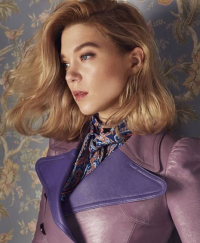 |
Evanya "Eve" Myshelovna Tarasovich
Eve takes heavily after her mother, the sad and beautiful model who shone like a shooting star, loved her father as she tumbled from the sky, and had the misfortune to expire into glittering dust shortly after producing a daughter. It’s impolite to discuss affairs, and Eve has never asked many questions; her place in the household was likewise accepted without comment, despite her dishevelled crown of golden hair marking her quite distinct from her brother’s shadowy magnificence. Irrespective of the obvious differences she certainly inherited the Tarasovich charm, a product of both nature and nurture, though one she wields with a softer finesse. Others are drawn to her like a moth to flame, but no trap descends, and she does not burn.
Growing up alongside the shrewd Daniil, Eve was drawn to watch their father’s machinations with equal fascination, but drew entirely different lessons. Diplomacy, influence, persuasion. Myshelov was an artist, and Eve was a willing and talented student, yet she has no aspirations to follow her father politically, nor craves infamy for herself like her brother. She’s perhaps the only one who sees through their charm to the ruthless steel beneath, but she finds no fault with it. She reconciles herself easily with moral ambiguity and does not wish to change the world, just to make it a more tolerable place for herself and those she loves dearest.
Eve adores languages, art, philosophy, history, but especially the community experience of culture. As a teenager she was often Aunt Olena’s shadow, unravelling the stories of the artefacts in their cases, and begging for a chance to lead the tours. People were her equal passion, for though she did not desire a spotlight like Danya, she did enjoy the small ephemeral connections to be found with strangers. She handles people with the same thoughtful care she always employs with the contents of the museum displays. And she always places them back just as carefully.
Cultural heritage was an interest which soon expanded, and she devoured Moscow's museums and galleries as a child. As she grew older birthday treats were nearly always trips abroad to see some famous piece or other, and she enjoyed each new experience in the different countries of the Custody just as much. Amidst it all was exposure to high society – dinner with a Patron’s family here and there, say, with each occasion subtly interspersed between the artistic exploration which was well known, by then, to delight her. Those tours were the simple indulgences of a cherished daughter, and what important, loyal Custody family would not be pleased to host her? Eve was not unaware of the gentle shaping of her father’s designs, but she didn’t seem to mind either. When Myshelov asked her about her trips, she always knew what he actually wanted to know.
At eighteen she left Moscow to study abroad, and she continued to travel between those studies, and afterwards. Yet she returned home often, and was known for hosting elegant parties and gatherings when in residence. Whether intimate family dinners, soirees with friends, or lavish government affairs in her father’s honour, it was always Eve at the heart of it. For no matter how far she roams or for how long she’s gone, home is a place that always beckons her back – and it’s always a place she deems worth celebrating with the people who make it so.
She was in London during the Alistair Grey trial, a case which was to become one of many jewels in Daniil’s career crown. By then she saw her brother only seldom, for their schedules rarely aligned, and she made the most of it when the opportunity arose. In the meantime she was at a gallery opening in the heart of the city, and that was where she saw the painting; one of a beautiful woman surrounded by an unearthly glow. By then the Sickness had come and passed several times unremarked upon – Eve wasn’t the sort to complain or linger abed if she could stand – and that night her skin was a little luminous with the fever, her mind caught on that image as though it ought to mean something to her. The artist was not in attendance, and neither was the painting for sale.
She recalls that a man came to stand at her shoulder while she was looking; tall, mild-eyed, well-dressed. He asked her what she thought it meant, an opening into which she normally would have given an eloquent answer. But for once she couldn’t quite put it into words. Home. Life. The flame that comforts. He interrupted her thoughtfulness with his own answer: one that was strange, specific, and stuck with her years after. He called it a surrender to true power; a prescient vision of a world yet to come.
She first met Guillaume at an avante garde Parisian bar, on a balmy summer evening while she was sipping red wine and sorting through various potential acquisitions to explore while in the city. She was twenty-one then, fresh from graduation and eager to spread her wings. That night she recognised the swagger of a Volthström when she saw one, which did not impress her on its own, but she smiled over the rim of her glass anyway, and he sat down, and that was that. Eve was somewhat aware of his reputation at the time, but her heart was never on the table, and she only ever shared what she was willing. Maybe it was the wine or the warm evening which cast the spell, or maybe Eve herself, but it was into the moonlight hours they spilled several hours and bottles later, still talking. Eve likes to talk, about everything and nothing, but she has a way of unpeeling the layers. Philosophy, art – your deepest secrets.
She was fascinated by the dichotomy of him; trapped by the heavy chains of familial obligations, far too heavy for such a restless spirit. He was full of the sorts of stories designed to impress, scandalise, and arrest with his charm. But they glittered like a smoke screen. Eve absorbed it all. The hints of his insecurities. The loyalty to his father. The uncertain quest for connection. In short he was a rebel, but one who knew he’d never escape the leash. Perhaps he did not want to.
She threaded her fingers through his on the dark city streets as they left, and let him walk her the long way to her hotel. At the door his eyes were shining and warm, as though the wine was not the only thing he was intoxicated by. But she didn't kiss him; instead she thanked him for his company, and allowed him to be exactly the kind of gentleman he told her so certainly he wasn’t.
For a while after that they were inseparable. The romance was slow burn, and she opened to it only slowly, but each moment was deliciously intense. Trips to Tuscany to see Botechelli and David and the Duomo basilica, vibrant evenings amongst the colourful eccentricities of Soho, log-burning fires in a Swiss hideaway, where curled under fur blankets she finally whispered her own secrets in exchange for his. They talked a lot, but she never asked what he did with the rest of his time. Paris’s infamous libertine had a secretly romantic soul, at least where she was concerned, but she didn't intend to change or tame him; she just wasn't ready to burst their bubble with reality. Not because she feared discovering infidelity, but because she was wary of commitment.
By then Eve was more than a confidant and paramour, she was a match; the weight which could promise to anchor and domesticate the Volthström heir, at least so far as Emmeline and Timothée were concerned. They loved her, welcomed her like a daughter. Eve’s poise and pedigree were indisputable, and she’d even befriended Guillaume's cold, quiet sister on trips to the family estate.
Then, quite suddenly it was over. Gossip suggested Eve had spooked at the rumour of a ring, but others said it was just Guillaume being Guillaume. That of course he would grow bored eventually.
Eve fled quite literally – all the way to America, where she was beyond the Custody’s reins at all. Myshelov was not happy for her to be so far away from home, though she soothed him with assurances of her capability using every ounce of charisma he had ever nurtured in her. America was utterly unlike Europe, its history far younger. The perfect place to breathe. She found herself exploring the art scene in Manhattan, and ultimately fell into the circles of Araminta Rosewood – a vibrant, warm artist who captivated Eve immediately. It has almost been two years, the longest Eve has ever stayed away from Moscow. But the reprieve has come to an end; her father has called her home.
Personality: Eve is thoughtful, empathetic, and unhurried in her judgements. She understands influence and persuasion but wields them with care rather than calculation. Like all Tarasoviches, she was born into a world where influence is both weapon and inheritance, but for her influence is not about control, it's about resonance: leaving others subtly changed by having known her.
Her moral compass is not fixed but fluid, guided by empathy rather than principle. She accepts imperfection, in herself and others, and believes that kindness can coexist with cunning. To her, morality is not an absolute — it’s an art form, practised with intention and grace. She is content not to change the world — only to make her corner of it kinder, more beautiful, and filled with people worth loving.
At her core, Eve is a curator of human connection. She collects moments the way others collect art: a conversation, a touch, a shared smile in a crowded room. Her relationships — whether fleeting or profound — are her truest masterpieces. Wherever she travels, she carries “home” within her — a constellation of people, places, and stories she cannot quite leave behind.
Appearance: She is known for her understated elegance — soft fabrics in muted tones, delicate gold jewellery, and perfumes with notes of jasmine and smoke. Her fashion choices are timeless, blending nostalgia with modern refinement. Within Custody high society, she is often described as “the golden daughter” — a title both affectionate and faintly mythic. Her hair is a golden blonde which lightens in the summer, often worn short about her chin or shoulders. Her eyes are blue, and she’s 5’5’’
Other Lives: Alyona Daylar, the Dragon's Wife (2nd Age), Hestia, Greek Goddess of home and hearth (6th Age)
|
|
|
|
| Stories So Far |
|
Posted by: Nox - 10-29-2025, 01:21 PM - Forum: General Discussion
- Replies (1)
|
 |
When we added new categories to the forum the Stories so far, and the wordpress integration for list of RPs was broken. I've fixed that.
So all Thread should hopefully be showing up again.
|
|
|
|
| Checking In |
|
Posted by: Cruz - 10-27-2025, 12:46 PM - Forum: Residential, Estates & Hospitality
- Replies (24)
|
 |
Nox hadn't exactly told him about Rachel, nor had Sage, but they had mentioned something about killing a monster who was preying on her. They didn't talk as often as they used to and it was something he was trying to remedy, but his life and theirs didn't mix as often as it did when they all lived together. He really should stop by Nox's to see his new place. And even Sage's to see his new set up. He lived with his boyfriend, who also had money. It was strange thinking they had all been friends because of his untrained talent. Now they barely spoke.
But Cruz wanted to know how Rachel was doing. He could ask Emily, though he was pretty sure that she would blow him off. And Rachel well, that could happen too, but better to go to the source.
She would still be pissed at him for the things he did, but he still cared. Still wanted to make sure she was alright. So he popped off a text to her.
I heard about what happened. I'm just checking in to see how you are doing? I know we aren't together but I still care about you. Want to make sure you are still okay. Maybe we could need for a coffee and talk?
|
|
|
|
| New Years Eve |
|
Posted by: Daphne Du Cadeau - 10-26-2025, 10:50 PM - Forum: United States
- Replies (18)
|
 |
The door was steel-framed glass, too modern for the building it had been welded into. Daphne paused just outside, the soft snow drifting into her hair like forget-me-nots. Two women inside laughed over flutes of champagne, their dresses shimmering, their joy loose and careless. The sound of it pressed faintly against her temples.
She exhaled once, slowly, then stepped forward.
Inside, the gallery was warm and loud with music: elegant but just tasteful enough to disguise the excess. The smell of old stone fought with perfume and food wood. Paintings hung in staggered levels beneath high ceilings, some backlit with halos of gold, others hunched in various light-scapes.
A man in black approached, tablet in hand. His gaze flicked over her hair, her gloves, the earrings that had once belonged to her Volthström great-grandmother. He drew breath as if ready to deny her entrance.
“I’m not on the list,” she said, her French accent soft, vowels touched crystal and cool. “But I was told the artist is showing new work. I’m prepared to purchase. If any are for sale.”
She let the silence wait a few moments without being forceful. Just enough time for the man to think of a commission if one existed. He stepped aside.
“Welcome, ma'am.”
She inclined her head once and entered.
She moved like water through the crowd, her silvery-white gown caught the light in spectral flickers. It was neither sequined nor adorned, but perfectly tailored, as if the dress had been sculpted for her by stillness itself. The fabric clung with dignified reserve. She was well accustomed to such attire.
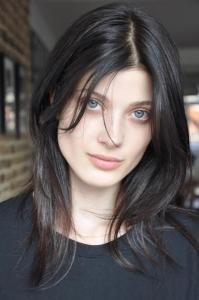
Her skin was pale as porcelain, untouched by the cold outside. Blue eyes peered with curious iciness, intelligent, and faint distance. Her long dark hair had been smoothed and drawn back on one side with a silver pin, leaving the other to fall like polished obsidian over her shoulder. She wore opera-length gloves, pearl white and unwrinkled. Around her throat, only a thin thread of silver chain dangled.
The emotions struck her immediately.
Laughter was like birdsong at the edge of a canyon. Pride billowed from a man boasting about his art collection. Desire, sticky and gold-edged, leaking from a corner where a woman leaned into a man not pretending he hadn’t noticed. And beneath it all: longing, sharp and sudden and foreign issued off of him in return.
She stilled herself. A gallery attendant offered her champagne. She declined with a motion of her hand, fingers straight. Her gloves were lined with silk, but they were like a shield. She did not wish to muddle her mind with alcohol.
She breathed, adjusted her posture, and pressed on.
She saw the painting halfway through the adjacent gallery.
It was not the largest, nor the loudest, but abstract in form and framed in a way that set it slightly apart. Perhaps it was intentional. A soft shape washed in pale grey and bloodred tones. The composition drew her study, but there was a simple nameplate on the display: Araminta Rosewood.
A voice to her right stole her attention.
“That's one of the artists' earliest works. She never sold it despite fabulous offers."
Daphne turned. A man stood beside her. He felt of curiosity, and something fuzzy that she assumed was the effects of the prosecco in his hand. He wore a fashionable blazer with a pin shaped like a magnolia leaf on his lapel. His smile was loose but not unkind.
She offered a polite smile, hoping it would draw out his curiosity.
“I would like to speak with the artist.”
He laughed softly. “Oh, Minty is around somewhere."
Daphne studied him a moment, her senses sweeping through the warmth of his mood. Minty? Her gaze connected the nickname with that on the display plate.
“Does Ms. Rosewood own the gallery too?"
That paused him. His brow furrowed faintly, then smoothed. “Of course. How do you not know that?" He chuckled and wandered away.
Her Wallet buzzed. She stepped aside and glanced at it.
MOTHER: Daphne. There is rumor of a border lockdown that begins at 4:00 a.m. your time. You cannot risk it. We will send a car.
She exhaled through her nose and typed quickly.
DAPHNE: Those rumors have been incorrigible. I'm sure nothing of the sort will happen.
Another message appeared instantly.
MOTHER: Do you want to sit in customs for hours? Have you the faintest idea how awful that will be?
She didn't need her sixth sense to imagine her mother's frustration. She silenced the phone, but not before doing a quick search for Araminta Rosewood.
The music swelled. From a corner near of the gallery a violinist had begun to play. A live quartet was now blending into the crowd’s crescendo. Laughter rose. Talking gained momentum. Excitement filled the room. The countdown was soon to begin.
|
|
|
|
| We Shall Be Monsters [Paragon] |
|
Posted by: Ghost - 10-26-2025, 10:03 PM - Forum: Business District
- Replies (7)
|
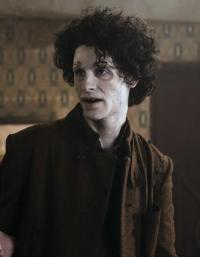 |
Adam sat on his bed, the room around him dark. His night vision was activated, so he could see clearly - it was a benefit of having cybernetic optics. He much preferred the dark to the light. Then others wouldn't have to see. It was also more fitting for his alias "Ghost." Only one had seen him besides Victor and Mr. Haart. A woman - a quick step in - and then she filed at the sight of him. Adam hadn't been offended. He knew what he looked like. The broken mirror in his room was a testament to that. Adam had shattered it after looking in it. Still - he couldn't say that he had liked that reaction. He had a neighbor it seemed. A neighbor that was terrified of him.
Adam stood, his hand going to his abdomen. He felt pressure there. The biofuel cell was still new and it would probably take a few more days for his body to fully adjust to its presence. It was working. The lethargy he had felt after his first few implants had disappeared. Victor had theorized that he needed extra power for the amount of cybernetics he carried. He had been right. The cell utilized glucose to power his various implants. As such, his sugar intake had increased dramatically, but because it was all being burned, it had little effect on his health overall.
With the implant adjustmet, Adam had to take medications to suppress his immune system. His body registered the implants as foreign invaders and attacked the implants. Immunosuppressors countered this. After a week, the body seemed to accept them as his own. Adam pulled a liter bottle of Coke (the good stuff with real sugar) from his fridge and drank, taking a couple of pills with it. That should be enough.
Adam returned to his bed, sitting. The room itself was very comfortable. He pulled a book off of a table to pass the time. It was an old science-fiction book about a desert planet or something, but he was enjoying it. It kept him busy in between operations. Adam assumed eventually they'd want him to leave. They'd have to "field test" him or something, but he found himself not wanting to leave. If he left, then they would see the scars - see the monster he had become.
|
|
|
|
| Adam Forrer aka "Ghost" |
|
Posted by: Ghost - 10-26-2025, 08:47 PM - Forum: Biographies & Backstory
- No Replies
|
|
1816 - Villa Diodati, Switzerland
The weather was uncooperative. It was the Year without a Summer. Even near the hearth in the Drawing Room, the cold could be felt. Mary sat next to Percy and shivered slightly at the cold, barely held back by the flames.
“Our trip is turning out to be somewhat of a letdown, Lord Byron,” Percy said, humor circling his tone. “Not your fault, of course, that the weather will not cooperate.”
Lord Byron smiled at Percy’s jest as did the other guests. “It is true. I expected us to have more to do during this visit, but alas, the storm doesn’t appear to be letting up. Still, let us make the most of the situation. Let us all adjourn to our rooms, come up with a story and tell it to the rest of us. We can make it a little competition to see who can come up with the best idea.”
“A brilliant idea!” Dr. Polidori exclaimed.
“It should have a theme,” Claire, Mary’s stepsister said. “Not just random stories - but within the same genre.”
The group agreed. “Since the weather keeps us indoors, let us use that as inspiration. The perfect weather for a gloomy tale. Let us all write stories to chill the bone! Does everyone find ghost stories to be an acceptable theme for our competition?”
The group agreed and Mary headed to her room, closing the door lightly behind her. Thankfully, it was warmer in the smaller space, still she added some wood to her fire. She was quite taken by the chill. Mary went to her desk and pulled out a few sheets of paper, a pen, and a bottle of ink.
Hours passed and her page remained blank. She stood and went to the table. A bottle of wine sat on it and she poured a cup, determined to sit by the fire and think. She stared at the flames as she sipped. A ghost story. Why was she having so much trouble writing a ghost story?
Then the flames began to move unnaturally. Mary felt as if she was being pulled into them. Before her eyes, she began to see images. A man stood above a body and he was sewing pieces to it. She then realized the entire body had been put together this way. The vision shifted and the body on the table was sitting up. It shifted again. The man and creature were talking. The creature spoke, she didn’t hear the words but knew what it had said. “I ought to be thy Adam, but I am rather the fallen angel…” She saw the life of this creature. A desire to do good corrupted by mankind. An unholy abomination through no fault of its own - but the fault of his creator.
Mary was pulled out of the vision by a knock on the door. “Mary, are you alright - I heard a crash.” Percy said from the other side.
Mary looked around and saw that her wineglass had slipped from her fingers and shattered on the floor. “I’m okay, Percy. My glass just slipped from my fingers. I’ll have it cleaned up momentarily.”
Mary dismissed Percy and began to clean up. She had her ghost story now. More importantly she had a warning to issue. Her visions had been too real to just have been her imagination. Something was going to happen. Deep down she knew someone was going to create that poor creature, and if they didn’t know how to respond, people were going to die. Maybe her warning would stop the poor soul from being built, but if it didn’t, they needed to be ready.
“‘Man’, I cried, ‘how ignorant art thou in thy pride of wisdom!’”
Adam Forrer wasn’t an ordinary child. He grew up in Freienbach, Switzerland as the adoptive child of Victor and Elizabeth Forrer. His adoptive parents were never physical with him, but they remained emotionally distant, although Elizabeth was less distant. Adam knew nothing of his own parentage. He also was unaware that he had a twin sister. Through genetic manipulation, Adam was engineered to have an extreme resistance to pain. His sibling was the opposite, she would be extremely sensitive to pain and emotions.
As he grew up, Adam wouldn’t notice pain. Even as an infant, he didn’t cry as he got vaccines or fell. At school he broke his arm in a fall and didn’t notice until a teacher mentioned it. Adam learned to cope, but he knew he was different. Asking his parents got no response, only that he “was the way he was” and to be careful.
Victor, a scientist, knew of his adoptive son’s condition. It had been manufactured on purpose. A purpose that fit his experiments. Victor was a member of a secret organization called the Di Inferi, and wanted to combine man and machine. He wanted to make cybernetics to create more powerful people. Beyond that - to create immortality. His adoptive son was a guinea pig - as one who couldn’t feel pain, he would be a perfect test subject.
When Elizabeth found out, she confronted her husband. She died the next day of an apparent suicide. Adam took over as a single parent, again remaining emotionally distant from his son.
When Adam became of age, he signed up with the CCD military. It was a way out of his house. Victor didn’t stop this, even though he wasn’t sure he approved. In the military, Adam joined the infantry and was quite adept as a soldier.
As Adam trained, Victor went to Moscow. There he met with Ephraim Haart of Paragon where he proposed a project. He didn’t share his true purpose, he instead went with another reason. With channelers now a thing, he had an idea to counter them - Cybernetic implants to counter channeling. He even had in mind a perfect subject and was certain he could get the subject to agree. Agreeing with this, Project Ghost was born.
Victor then went to Adam and spoke with him about the project. Once again, he lied about the true nature of the project. To his son, they were testing the ability to use cybernetics to help disabled veterans regain their mobility. Adam agreed and signed the paperwork.
Adam still had time on his tour of duty, so it would be some time before he could, but as soon as he mustered out, he’d head to Moscow to begin. The plans changed when he was involved in a training accident. A body was never found and Adam was presumed dead and labeled as such.
But Adam had not died. The accident had been orchestrated by Victor and through some bribes was able to recover Adam’s body. With the exception of an arm that had been severely damaged, Adam came out mostly unscathed. With that, Ghost was born.
Victor took him to Moscow and began to work. Ghost received his first implant - his damaged arm was replaced by a cybernetic one. It was a simple test to see if the implant would take. It required immunosuppressors at first. His body attempted to reject the arm, but adjusted with time.
Victor continued his work, adding more implants to Ghost’s body. The newly acquired research from Cyberpoint sped up his experimentation. To Ghost, he was an experiment to make lives better for his fellow soldiers wounded in war. To Ephraim, he was a cybernetic soldier designed to counter channelers, but to Victor, he was a path to immortality.
*Note: Project Ghost is a confidential project of Paragon. Ghost and all of Victor’s research is owned by Paragon.
Current Cybernetic Implants:
Optical implants/Retinal HUD: Eyes are non-oranic and features a retinal heads up display similar to military lens warriors. The HUD syncs with his smart gun through an implant on his cyberarm that can display ammunition count as well advanced targeting. Through a blue tooth chip, his wallet is also synced. He can read and compose text messages from his eyes. Night and thermal vision options also exist.
Auditory Implant: Increases hearing ability to supernatural levels, but makes him sensitive to loud noises. Can be utilized to make calls though blue tooth chip.
Blue tooth Chip: Allows his wallet to be connected to his visual and auditory implants.
Cyberarm: A fully functioning arm and hand,, but stronger than organic variants. It has a sensor that connects to the grip of his smart pistol. Not only does it keep Ghost appraised of the condition of his firearm and the amount of ammo in it, it allows only him to use the firearm (Paragon/Victor can override this feature).
Neural Motor Interface: Links to powered exoskeleton joints for augmented strength and precision.
Muscle fiber grafts: Provide increased strength and speed and resistance to blunt trauma.
Biofuel Cell: Converts glucose to power implants directly. Also requires Ghost to consume and immense amount of sugar.
Nanomedical Repair: Uses nanobots to repair injury and fight infection.
Kill Switch: Unknown to Ghost is an implant that will shut down his implants (besides the life providing ones) to effectively blind, deafen, and immobilize him. (Victor/Paragon have access to this).
Real Name: Adam Forrer (Officially deceased)
Age: 23 (24 on January 1, 2047)
Characters Origin: Freienbach, Switzerland; Moscow
Occupation: Soldier/Experiment
Psychological Description: A generally quiet man, Adam seems more introspective than anything. He’s very insecure, especially about his looks since the multiple invasive operations done to his body.
Physical Description: He has a soldier’s build. Before his surgeries, he was an attractive man, but now a good majority of his body is covered in scar tissue. His eyes, although not organic, look real and are hazel in color. His hair is dark and shaggy.
Reborn Gods: Adam, Talos (Currently: "Frankenstein's" Monster)
Supernatural Powers: Learner, but the operations have damaged that and without repair he will be unable to learn.
|
|
|
|
| Daphne du Cadeau |
|
Posted by: Daphne Du Cadeau - 10-26-2025, 08:23 PM - Forum: Biographies & Backstory
- No Replies
|
|
In 1937, Arabella Beatrice Cordelia Asquith married into the Volthström family. Her union was with Émeric Volthström, youngest brother of Baron Maurice of the French line of Volthstroms. The marriage contract included the standard dowry of property, bonds, and minor heirlooms, but buried among the annexed documents was a curious clause written in unusually vague but binding legal terms. The clause outlined an obligation for the Volthström line to “receive and raise” a future child, unnamed and unknown, at the discretion of the Asquiths, should the time ever come.
The clause was invoked eighty-three years later, after generations had passed and the marriage itself become another record in a long family line. But someone enforced the contract, delivering a newborn girl to the Volthström house in Paris on a gray January morning in 2023. The infant, swaddled and unnamed, arrived with only two things: a birth certificate missing the parents names and a notarized letter referencing the original 1937 dowry clause.
Emmeline Volthström, the current lady of the house, was not consulted. The child was left in her care with no warning, accompanied only by her husband’s insistence that the family had no choice but to accept the girl. Timothée Volthström offered little in explanation beyond a quiet remark: “It is an old arrangement. We must honor it.”
Though raised in the Parisian Volthström household with warmth and dignity, Daphne holds no legal claim to the Volthström estate or property. The family charter, updated rigorously each generation, holds rigid definitions of inheritance through bloodline. As an adopted child, Daphne is not considered an heir, nor is she included in any known trusts or holdings.
This left her in a peculiar position: educated among the elite, trained in etiquette and diplomacy, fluent in multiple languages, but without dowry, inheritance, or much more than a lifestyle expense account. In their social circles, her future is a delicate matter of whispered speculation. It is understood, though rarely said aloud, that her best and perhaps only chance at securing her place in the world is through an appropriate marriage.
But things were off with Daphne, even as an infant. She exhibited unusual reactions to the world around her. Touch, temperature, and even minor injuries seemed to overwhelm her system. A scraped knee would induce tremors; a mild fever might render her bedridden. She was eventually diagnosed with hyperalgesia, a condition that causes extreme sensitivity to pain, though no treatment offered lasting relief.
More troubling, however, were the inexplicable episodes. Daphne would awaken in the night gripped by searing pain without cause. She might collapse during school hours, overcome by nausea or a burning sensation in her limbs. These episodes rarely coincided with any discernible illness or injury, leading physicians to dismiss them as psychosomatic or emotional in origin.
Privately, Daphne began to wonder if the pain she experienced was not always her own. She could sense the physical suffering of others in close proximity, often with disturbing clarity. A classmate’s toothache would become her migraine. A maid’s sprained wrist would cause her arm to throb. As she matured, she learned to mask these reactions, concealing her discomfort behind a quiet, impassive exterior. Unbeknownst to her or her adopted family, the explanation for her condition extended far beyond medical understanding.
Daphne was not born alone. She had a twin brother unknown to her and to those who raised her who had been used at the embryonic stage for a scientific initiative operating under the guise of fertility research. The embryos were subjected to a series of advanced and ethically dubious genetic modifications, but their fates diverged sharply by design.
Daphne’s twin was engineered to possess an extreme resistance to pain. His body was prepared for a lifetime of cybernetic experimentation, one that would require the suppression of physical sensation in order to endure invasive procedures and integration with technology. Daphne, by contrast, was altered to experience the opposite: heightened sensitivity to physical and emotional stimuli. She was intended to serve as a living case study in empathetic perception and sensory vulnerability.
What the scientists had not predicted and failed to understand was that Daphne's soul carried a rare form of sentience, and one that bound her psychically to her twin. While he could not feel the pain inflicted upon him, Daphne could. Their connection, forged in the womb, remained intact after birth despite their separation. Over the years, she experienced phantom echoes of her brother’s suffering: flashes of pain with no clear source, moments of anguish that belonged to a life not her own.
This unexplained resonance became the undercurrent of her identity. Though she had never been told of her twin, Daphne came to believe that someone else was out there; someone who felt both familiar and impossibly distant. This conviction eventually became the quiet motive behind her pursuit of her biological origins. She was not seeking love or answers, but rather a missing part of herself that she could not name but had always known.
Daphne is paradoxical, though. Although her soul is finely attuned to the suffering of others, she presents herself as detached, logical, and emotionally reserved. Her demeanor is cool and proper, shaped by years of managing overwhelming sensation through intellectual control. She avoids physical contact whenever possible and prefers solitude to social gatherings.
Her academic interests lean toward the philosophical, neurological, and metaphysical. She is dedicated to her studies, particularly in fields that allow her to impose structure like ethics, linguistics, classical literature, and cognitive science. She is deeply rational, even when confronted with experiences that defy logic. Her emotional life is largely internal, fiercely guarded, and expressed only in moments of untold intimacy or extreme crisis.
Socially, Daphne is regarded as elegant but aloof. Suitors find her beauty and intellect captivating but are often discouraged by her lack of warmth. Rumors about her status within the Volthström family circulate in their social circles, casting her as either a tragic foundling or a clever interloper. Few know the truth, and fewer still would understand it if they did.
After years of suppression, her sense of being incomplete of carrying someone else’s pain has only intensified. What began as isolated episodes of phantom sensation has grown into something more persistent, intimate, and increasingly difficult to dismiss.
Though she has asked her adoptive father, Timothée Volthström, on multiple occasions about her origins, he has offered nothing of substance. With his characteristic restraint, he has explained that he is legally unable to speak on the matter, and that even if he were permitted, there is little he knows. The contract’s specifics are known only to those who drafted it, and they are long dead or long silent. Whatever sentiment Timothée might feel toward her, he has made it clear: this is not a past meant to be unearthed.
Emmeline, for her part, urges caution but lacks the conviction to truly stop her. She has always loved Daphne in her own quiet way, but she, too, is bound by the rules of the house. The Volthström legacy is heavy, ornate, and guarded. It was never designed to accommodate questions from outsiders, even those raised within its walls.
Yet Daphne is no longer content to remain in the dark. It was her adopted brother that implied she look into the Volthströms’ archives. If the truth is in the past, the past is where she ought to go.
Under the guise of continuing her academic studies in historical economics and dynastic legal structures, Daphne has begun traveling to various Volthström holdings across Europe. The family’s ancestral holdings in London, Frankfurt, Vienna and Rome, were each operated by distant relatives or historical stewards, but in the case of Vienna or Frankfurt, were outright dead ends. Ostensibly, she is researching transgenerational wealth preservation. In truth, she is quietly searching for records, correspondences, or overlooked mentions of the mysterious clause that sealed her place in the family.
In London, she visited the Volthström townhouse in Belgravia, where her cousins received her with mild politeness and cultivated disinterest. She is tolerated, even humored, but never taken seriously. Her questions about family records are redirected, her inquiries into past adoptions or wardships brushed aside with smiles and vague excuses. It was here, during a formal dinner, that something subtle occurred: something that would have passed unnoticed by anyone else.
Seated across from an elderly cousin, Aunt Honoria, a woman sharp of wit but dulled by dementia and age, Daphne felt a ripple beneath the surface of conversation. While reminiscing about traveling across the world prior to the turbulence of the 20s, Honoria made a comment about leaving treasure behind in New York, and though the words were quickly swallowed by laughter and dismissed as senile rambling, Daphne felt a sharp, almost electric echo in her chest, like a wire pulled taut. She felt the pain of regret as her own.
When the conversation moved on, Daphne remained frozen, not by the words themselves, but by the emotional disruption beneath them. Her empathic sense registered a wave of shame, followed by something tightly sealed: a fear of being overheard. It was not Honoria who reacted this way, but it was her cousin Tobias seated nearby, who stiffened imperceptibly when the phrase was uttered.
Daphne made a fateful leap in logic: a Volthström child was given away. It must have been her. She cannot imagine any other explanation.
Daphne arrived in New York City in mid December of 2046. Her inquiries were discreet. She consulted archival registries, leveraged minor connections in academic and preservation circles, and spent long hours in digital municipal databases. Eventually, in the maze of public property records and tax transfers, she found cousin Tobias’ name.
The listing showed that Tobias once owned a pied-à-terre in the East Village, that he suddenly sold for a reported $17.5 million in 2021 without a known reason. There were no inheritance records, no death certificates, and no linked familial claims. To the casual observer, it was an ordinary transaction. To Daphne, it was a rupture. With the winter sun low and pale over Manhattan, she went to see the building for herself.
The building stood three stories tall, framed in faded red brick and cast-iron columns. The original façade remained intact, but the interior had changed. Through tall, street-level windows, she could see that the space had been converted into an art studio: an open-concept loft with high ceilings, abstract light fixtures, and paint-splattered concrete floors.
Inside, she glimpsed the glow of hanging lights and canvases arranged in haphazard clusters. Music filtered faintly through the glass, but there were clues that a celebration was being prepared.
It was December 29th, and her presence was expected in Paris for New Year’s Eve, where the family was hosting their annual black-tie gathering. Her seat had already been assigned, her dress couriered from the Rue Saint-Honoré. She was already cutting her return close, but something was pulling her inside. A window placard indicated that a New Year’s Eve celebration was also to take place at the studio, and she couldn’t resist the temptation to explore its interior.
Two nights later, she defied her mother’s insistence on her presence in Paris, and arrived at an entirely different sort of party.
|
|
|
|
| Making Plans (Artskaf) |
|
Posted by: Lore - 10-23-2025, 12:36 PM - Forum: Place of Enlightenment
- Replies (33)
|
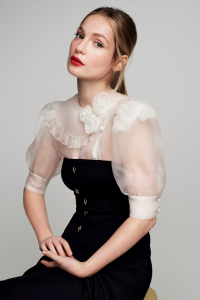 |
Lore settled easily into her new life in Moscow. Jessika was insanely busy, and Lore still coordinated her diary and generally smoothed her day-to-day with efficient tweaks, but it was more a hobby than a necessary job. The new Privilege had plenty of her own people to rely on, and even if Lore obviously did a better job, it wasn’t taxing work. It was beginning to feel like perhaps Damien had just wanted her out of Mexico.
Unperturbed, Lore turned her free time to her own endeavours. In the coming days she had a meeting with Ana Vega, though it was only out of courtesy given she was in the city. She had no desire to interfere with how they would run Second Chances here, but she was eager to hear what wonderful things they had planned – to see the business really spread its wings and thrive. Similarly she had a meeting arranged with Ephraim Haart to discuss the IP she had sold on from Cyberpoint. From the portfolio she had perused, it was an exciting opportunity.
Beyond that she was busy filing and making notes on potential contacts - that was the way her mind truly flourished and started making connections. The Vasiliev’s masquerade had provided some networking openings, though mostly Lore had simply observed the glamour around her. She hadn’t even danced. A table in the cosiest coffee shop on the street alongside the company of her spreadsheets was much more her speed though. She much preferred to be prepared for speaking to people.
|
|
|
|
| A New Assignment East [Fal Sion] |
|
Posted by: Jared Vanders - 10-22-2025, 11:18 PM - Forum: Past Lives
- Replies (10)
|
 |
![[Image: Zoradin01.jpeg?resize=674%2C1024&ssl=1]](https://i0.wp.com/thefirstage.org/wp-content/uploads/2025/10/Zoradin01.jpeg?resize=674%2C1024&ssl=1) Zoradin Fel
Zoradin Fel
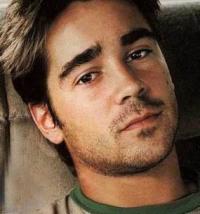
Zoradin dismounted his mare, a black horse with a white stripe on her nose he had name Daien. She was a beautiful creature. Zoradin left the horse with the stable master. His gait was slow. As always, he was exhausted, but not nearly as much as he usually was. Last night he succumbed to his exhaustion. He had slept a few hours before he had started screaming. It was never enough.
A message from the new M'Hael had sent him on this trip. He had been stationed in Arafel, and was planning on investigating a fortress there. The whole thing stank, but when the M'Hael got through to him, he was ordered to immediately head or Shienar. The situation was dire. 20,000 Andoran swords were on their way. That spoke of the dangers itself. He was probably here to help hold the line, perhaps heal some wounds - if they weren't too bad.
He headed to the officers to report in. "Zoradin Fel, Asha'man," he said.
The officer scoffed. "I need an army and I get a single Asha'man that can barely stand," he sighed. "You can fight can't you?"
The Asha'man nodded. "I can hold my own with the blade and one power."
He looked at Zoradin incredulously. "Well - we'll need it. Need to hold until reinforcements arrive. We should have time if you need to rest for your trip."
"I'll be fine, Sir," he said.
There was some more back and forth as Zoradin got more on the situation. He was led to a barracks so he could drop off his gear and he headed to the line. They had to hold until Andor arrived. That was his only goal.
|
|
|
|
|